Showing posts with label spinach. Show all posts

Friday, 27 March 2015

Sowathon!

March has been a busy month for many reasons, and I've been way behind with seed-sowing for the new season, but in the last week I've squeezed in a few hours in the garden and taken the opportunity to catch up!


This time last week was the spring equinox, when the days become longer than the nights again (hurrah!), and it seemed like a good time to sow my tomato seeds. I potted up all the pepper, chilli and aubergine plants from the propagator - they're looking big and healthy and have been spending daytimes out in the plastic greenhouse (pic above) - and I sowed five varieties of tomatoes in their place: Amish Paste (a good cooking tomato, but tasty sliced as well), Dr Carolyn (delicious heritage variety!), Angelle (my favourite, from seeds saved from supermarket toms), Skykomish (a blight-resistant variety) and Indigo Rose (the 'black tomato', super-high in antioxidants). They all popped up in just four days and are growing away on the windowsill now. The electric propagator is a real help in getting warmth-loving seeds to germinate!


They look a bit leggy - I guess we've had some gloomy days lately - but they'll catch up with themselves and I'll plant them deep when I pot them up.

We spent a couple of hours topping up the big raised bed in the garden, with the last half-bag of the compost we bought for the purpose last year, plus a layer of new multi-purpose compost. I treated the bed with sulphur before sowing to try to begin lowering its high pH (see previous post), but I decided it might be overcautious to limit what I sow in it this year - after all, growth did seem to improve quite a lot during the course of last season, and the layer of fresh compost should help a bit too - so I'm trying a bigger variety of veg in it than I originally planned. It won't take long to see whether they grow well or not, and I can always resow something else later... The bed already contains some parsley, chives, garlic and perpetual spinach from last year, and I filled up the rest of the space with rows of carrots, turnips, lettuce, spring onions, komatsuna, watercress, spinach, kohlrabi, radishes and mustard.


I also sowed some more celeriac seeds. I had been hardening off my young celeriac plants, but then I read somewhere that if celeriac gets too cold in its first spring it can think it's in its second year, and go to flower rather than producing a good root. Last year's celeriac didn't actually go to flower, but it was a terrible failure and I wondered if my early-hardening-off could possibly be why... So this new set of seedlings will be coddled indoors until the temperatures are higher out there, and we'll see if it makes a difference!


The corner garden bed needed a good clear-up - it had quite a few weeds, last year's bean poles and old bean and pea plants, and some honeysuckle and snowberry invading fast. Once tidied, I sowed some peas and mangetout against the fence, and scattered mint leaves and chopped up dry mint stems over them to keep the mice away - it works a treat!


Finally, I sowed some chard, leaf celery and flowers (cerinthe and achillea) in cells in the plastic greenhouse, and planted some early 'Accent' potatoes in sacks. The potato shoots could be harmed by frost after they appear, so I'll need to keep an eye on them and keep earthing them up or throw fleece over them on cold nights. I've got six of these bags so I'll sow two more in two weeks, and two more two weeks later, to spread out my harvest a bit.


I'm nearly caught-up but there's still plenty more to do, and it'll be April in just a few days... In fact, I'd better get back out there!

Tuesday, 28 February 2012

Kale and pepper update

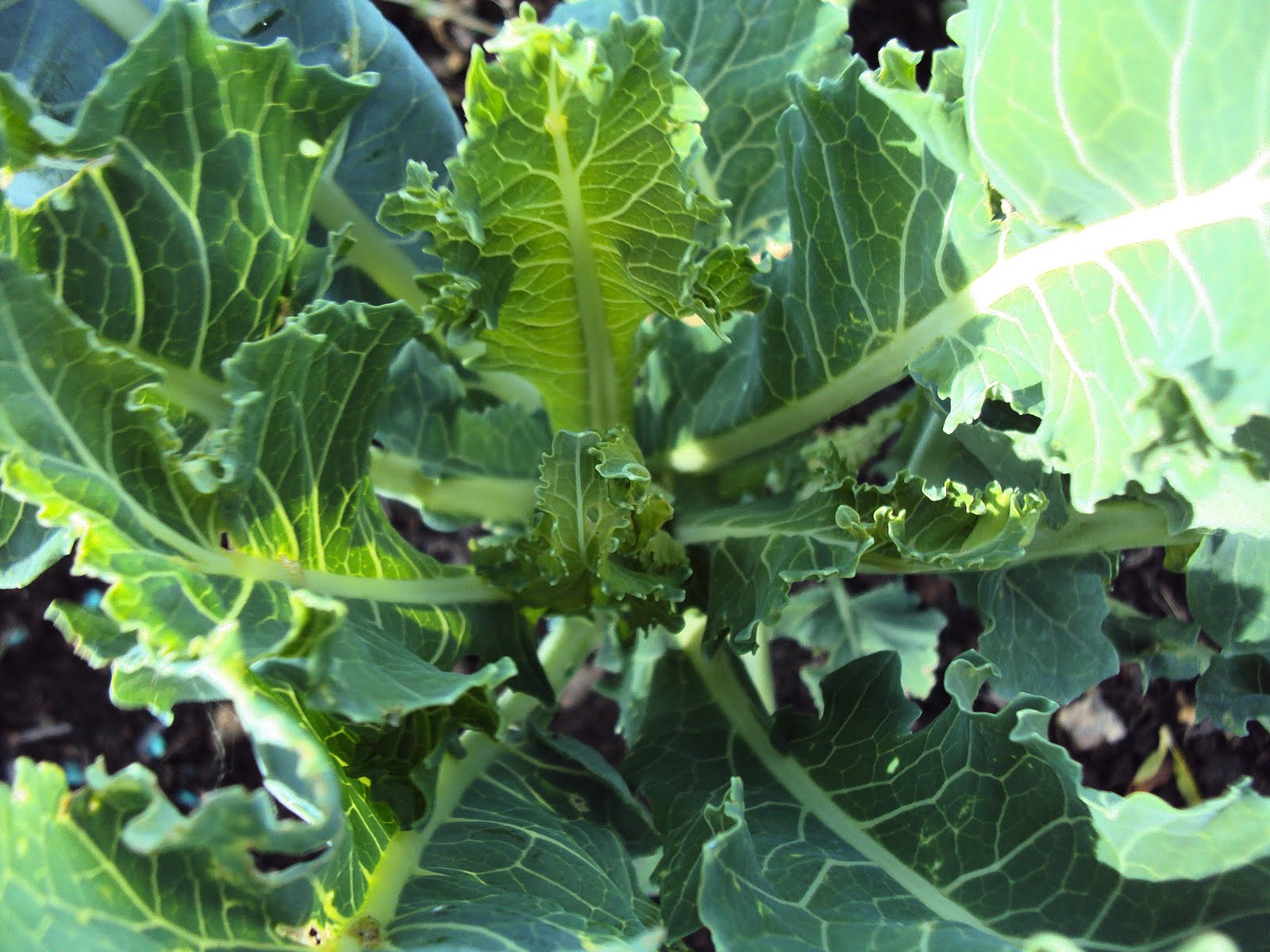
Remember my perennial kale, that drooped in the snowy weather? Despite lots of care, it didn't get better - the leaves went dry and crispy and I thought it had died. I was pretty miffed - it cost £5 plus £5 postage and it really should have withstood the cold weather better. Today, however, I spotted these new shoots coming from the base of the stem, so it looks like all is not lost after all! Hooray!


Sowing begins today - I'm planning a trough of mangetout, a tray of peas for shoots, two pots of parsley, a few early Swiss chard seeds in the greenhouse as an experiment, short rows of carrots, radishes, spinach and lettuce, and tomatoes and celery in the heated propagator. Really must get my broad bean seeds in at the plot soon too...

And to make space in the heated propagator, I've potted-on all my early chillies, peppers and aubergines. They're doing great and many are on their third pairs of leaves. I'm making a few extra sowings though, as one variety gave me zero germination (from seeds bought just last year!) and the ancho/poblano chillies, which I was really looking forward to, have only given me one seedling from ten seeds. Rubbish!


I'll leave these pots on the windowsill for now, to get used to not being heated from underneath, but as soon as we get some decent March sunshine I'll get them out into the greenhouse during the days and bring them in at night.

Monday, 12 December 2011

Winter Growings

Well, the temperatures are dropping at last, and I'm glad to say our garlic, onions and shallots have put on some decent growth despite a late start.


I had some pepper plants still going on the patio, hoping the little green fruits would get larger, but now one or two have started to show frost damage so I've finished off all those remaining.


Meanwhile, the chilli plant we brought indoors has decided to make up for its pathetic summer crop by flowering again. We will have Christmas chillies!


The plant seems to have a problem though, with several leaves turning yellow and dropping off, and traces of cobweb around the leaves. Looks like spidermite, methinks. (If anyone knows better, do tell...)


I'm reluctant to spray the plant while it's fruiting, but misting daily with water is supposed to help so I must get myself a new spray bottle (my old one doesn't work anymore) and start this a.s.a.p!

Half of the summer's chilli harvest...

The outdoor sowings I made in early autumn have had mixed results - the spinach has all died, the perpetual spinach has mildew and is being eaten by snails, the Nero di Toscana has been munched, the winter gem lettuce never came up... But the spring onions, radishes and claytonia are doing marvellously, and I've tucked them up in the plastic greenhouse for winter. In fact, the claytonia has self-seeded prolifically and is coming up everywhere... 


I'm not sure exactly what happens from here; will my salad crops keep growing slowly and steadily throughout winter, or do they stop completely and give me an early crop in the spring? I'll soon find out, I suppose... It would have been ideal to start them a month or two earlier so I could pick some during the winter - must try harder next year!


The purple sprouting brocolli and kale are still battling on and, barring any disasters over winter, should be ready to give me a great crop as soon as the weather warms up for spring. Not every plant has put on satisfactory pre-winter growth, but as long as I get them through the winter I'm sure they'll catch up.


Next task, now we've had a few decent frosts, is to get back to the plot and dig the parsnips up to store in a box of soil in a sheltered spot at home, safe from frozen ground, snails and flooding!

Saturday, 5 November 2011

Using Up Potatoes: Giant Rostis!

Every potato harvest inevitably comes with a few specimens damaged by sunlight, slugs, the fork that dug them up, or even by couchgrass roots, which burrowed a few holes through mine!


These should be separated from the undamaged potatoes and used first, as they're bound to go off sooner.

In an effort to use up our damaged spuds, of which we had really quite a few (and getting a little bored with mash) I thought I'd try to recreate a dish Eddie sampled in the fabulous veggie restaurant Terre a Terre recently:


(Disclaimer: My rosti may not be the same as/as good as Terre a Terre's, and certainly didn't look as good (theirs is pictured)... But it's still delish!) I altered it a bit to use up some watercress I had left over from something else, and it packs in even more flavour. Actually it's a really good dish to use up large amounts of spinach, watercress or any other similar leaf, as well as potatoes. You'll want at least 100g leaves per person and you could use much more if you wanted, so it's a good one for those bags/bunches of leaves the supermarkets and market stalls reduce at the end of the day too... It's a great, simple dish for one (though a bit of a juggling act if you're feeding a whole family) and a really tasty supper.

Giant Rostis with Watercress Sauce

  • Finely chop an onion and fry gently until really soft and golden, but not browned.
  • Grate around 200g potato per person, put it in a sieve or a clean tea towel and squeeze as much water out as you can.
  • Throw a couple of chopped garlic cloves in with the onion to soften.
  • Preheat your oven to 180C. 
  • Put the grated potato into a large bowl and season well. Add the chopped onion and garlic and gently combine (try not to break up or mash the potato too much!).
  • Divide the potato mixture into bowls - one per person. The shape of the bowls will shape the rostis.
  • Heat some oil in a non-stick frying pan, tip the first rosti in, and fry on a medium-high heat.
  • Once it is golden brown underneath, flip it over and do the other side. When that side is golden-brown too, put it on a large baking tray and do the next rosti...
  • When all your rostis are nicely browned, pop them in the oven to finish cooking in the middle while you make the sauce. (Maybe a more skilled or patient chef than I could cook them entirely in the frying pan, but because they're so big it seems to me they'd need this extra oven-time to cook right through.)
  • Meanwhile, wilt your leaves (100g-200g per person) down in a large saucepan with a knob of butter, salt and pepper, a splash of lemon juice and a little nutmeg. I used 2/3 watercress, 1/3 spinach, but you could use spinach only, or any combination really. I'm willing to bet chard, young kale, beetroot leaves, sorrel and any other similar leaf would work too (although sorrel really loses its colour when cooked so you might prefer to add it raw when pureeing).
  • When the leaves are cooked down, keep a couple of spoonsful aside for the garnish, and puree the rest (a wand-type blender is good for this). Add a spoonful or two of cream cheese (or a splash of cream and a little parmesan) and taste. Add more seasoning, cream/cheese or lemon juice if you so desire.
  • Poach (or soft-boil) your eggs.
  • When the rostis are done in the middle (ooh, about 15-25 minutes, depending how long you fried them for!), spread the sauce on each plate, top with a rosti, then a spoonful of wilted leaves, then a poached egg, and finally a generous handful of grated cheese!

To me this is great just as it is, but hardcore carnivores could be appeased with a sprinkling of crispy bacon bits or chopped ham. A nice piece of fish - especially smoked fish - would complement it very well too.

Wednesday, 26 October 2011

Winter Sowing

Okay, I really should have done this at least a month ago, but I was behind as usual and the weather's still so nice... It can't be too late yet, can it? Not if the volunteer salad plants I keep finding all over the garden are anything to go by. I've got claytonia in the seed-grown rosemary I gave up on and forgot about...


...and I've got rocket (or is it mizuna?) in my broccoli.


In fact, there are a lot of leafy greens that will grow over winter with a bit of shelter, and with night temperatures still not dropping below 8 or 9 here (with just one exception last week), a new cover on my plastic greenhouse, a quick study of Charles Dowding's great book 'Salad Leaves for All Seasons', and a sowing-spree in the sunshine on Monday, I have high hopes for at least a few overwinter greens this year. I've sown two types of spring onions, 'Winter Gem' lettuces, claytonia (love the stuff!), lamb's lettuce/corn salad, 'Bright Lights' radishes and some 'Nero di Toscana' kale (similar to the popular narrow-leaved 'Cavolo Nero'). They're outside hopefully being warmed by the sunshine for now, but if and when it turns cold they'll go straight in the greenhouse. Oh, and I've got some spinach and perpetual spinach going too, which I started some weeks ago, and of course the leeks and parsnips on the allotment, and some purple-sprouting broccoli and curly kale in tubs. With a bit of luck and care, this could just be my most productive winter yet...

Today we finally got round to sowing some winter turnips on the plot as well, and scattered the ex-potato beds with some out-of-date Phacelia seeds (fingers crossed...) to protect the soil over winter and provide some extra organic matter to dig into the soil in the spring. My mail-order onions, shallots and garlic haven't come yet, but I'm ready for them when they do.

And as a testament to how mild the weather still is, here's a very late-flowering feverfew I spotted poking up through my patio yesterday! Good job there are still flowers about - there are certainly still plenty of bees and butterflies enjoying them!


Thursday, 20 October 2011

...Hello Winter

Better late than never, I have been tending to some new crops for over winter and, hopefully, if they make it that far, next spring. I have a late-summer sowing of perpetual spinach doing well in a container in the garden, and a newer sowing of traditional spinach (Medania) popping up too. These will have to go under cover in our plastic greenhouse, I think, when it gets really cold.


I bought some purple-sprouting broccoli, kale and spring cabbage seedlings from Homebase in the sale a few weeks back, and I've now planted some of these out in tubs in the garden. I was hoping to put the rest on the plot but it's getting a little late now... They've been under constant attack from snails and caterpillars, but I'm just about keeping up. Pesky blighters, those caterpillars. They're too good at hiding...


Though I don't know how they think poses like this help...


Some of the psb is doing really well:


But I'm not sure others are going to make it...


I've put two kale plants into the box that grew beans all summer. Hopefully the nitrogen fixed into the soil by the beans will help to encourage lots of leafy growth. It certainly looks like it's working so far!


The chard, parsnips and leeks on the plot are all doing okay. The chard is a bit munched around the edges and needs a good weeding, which I'll do next week. The leeks are a bit bedraggled and small, but in my experience always perk up and come into their own early in the spring. The parsnips are a great size - I should probably dig them up and put them in a box of compost at home so I can get at them when the ground's frozen, but in reality I don't have anywhere to keep them... I've got some onions and garlic on order for the allotment too - I've never overwintered them before but it's got to be worth a try. I just hope I can get them in the ground in time!

Next job, though, is to sow some winter lettuces and claytonia for salads. It'd be good to sow some turnip seeds on the plot too if I clear enough soil. Is it too late? I don't have a clue. But there's only one way to find out...

Friday, 10 June 2011

The Simple Things

As much as I like fancy, cheffy food, and learning new dishes, and trying new things, and making stuff up, and fresh ingredients, there are times when you just want a quick, simple, fuss-free supper, and while it's easy to turn to a frozen pizza or beans on toast (and I often do), at this time of year when there are so many fresh green veg to be eaten it'd be a crime...

My go-to at times like this is a frittata (now served with some fresh, Nome-baked, no-knead bread!), and it's another one of those dishes where you can pretty much throw in whatever's available.

And I know I've blogged about frittatas a few times before, but they're so damn good I don't care. And I've stopped burning myself making them now I've bought myself some fancy 'Glovens'!

To make this frittata for two I dropped thinly sliced new potatoes and bite-size asparagus pieces into boiling water for 3 minutes, then fried chopped bacon and spring onions in a generous knob of butter, added the potatoes and asparagus, threw in some perpetual spinach and sorrel and let it wilt, then beat up four eggs with seasoning and a few tablespoons of milk, stirred the egg mix into the veg and topped the whole lot with chunks of brie. Then I let it sit still and cook on a medium heat until the edges started to look cooked (a few minutes) before popping it under a hot grill until set through and golden on top (a few more minutes).


Mmm, eggy, bacony, melty cheesy goodness - but with vegetables! We have vowed to have a frittata at least once a week, with whatever's available at the time - maybe a few more cheap suppers will save us a bit of cash too!

Tuesday, 24 May 2011

Up From the Grave

The 'Everlasting Cauliflower' I thought was dead has sent up two new shoots from the base!


It even looks like it's getting ready to make new heads.


Trouble is, what do I do about the nasty hollow stem? Will it rot if it gets full of rain? Will it harbour creepy crawlies? Should I block it up with something? Chop it off just above the new shoots?


We got a few jobs out of the way on the plot this weekend, although there's still a lot of digging to catch up on.

We earthed up the potatoes.


We weeded the broad beans. There, you can see what I mean about the righthand 'Bunyard's Exhibition' doing so much better than the lefthand 'Aquadulce' now. The string was originally there to stop pigeons nibbling the young shoots, but now it's providing a bit of support against the wind!


And we planted out the chard and some sorrel (foreground) in the little border by the salad beds. Ooh, and I pulled up all the bolted spinach from the salad bed and planted some perpetual spinach in its place.


Going to plant out the cucumbers today, and sow some marigolds and nasturtiums. I usually just let them self-seed, but I don't see any popping up this year and I can't have an allotment without marigolds and nasturtiums!


And I'm a sucker for a 3 for 2 deal!

Saturday, 19 March 2011

First Sowings

I know, I know, I'm way behind. The good news is MOST of the things I'm about to tell you about were actually sown a few weeks ago - I just haven't had the time to tell you about it yet.

First, leeks. The past few years I've bought leek seedlings, because of some early catastrophic failures, but this year I decided to grow them from seed again and I'm pleased to report that so far, it's going well.
I've got three varieties on the go for maximum chances of success; Autumn Giant 3, Malabar, and Musselburgh. In the background above you may also be able to make out some very tiny Winter Gem lettuces.

This year I'm growing mostly Angelle tomatoes from the seeds I saved from a supermarket tomato last year. The plants are really compact (straight up, few leaves, not much support needed) so I figured I could grow a lot in a small space. However, they've been rather sickly from the word go and a lot have 'damped off', so now I only have half as many! I'm planning another sowing tomorrow...
I've sown a couple of Hundreds and Thousands (from saved seeds) and Sub Arctic Plenty too, and they're doing fine...

As always, I'm having terrible trouble geting any peppers to germinate - I just don't know what I'm doing wrong! The Jalapenos are okay...
...but my King of the North green peppers, Dedo de Mocha Sweet Aji peepers (smoky flavoured but heat-free, the packet says!), Kaibi no 2 sweet red peppers and Doux Tres Long Des Landes long sweet peppers are showing few signs of life (twenty seeds, one shoot so far...). Perhaps I'll have to invest in one of those heated propogator things after all... Anyone recommend one?

We've been busy sowing on the plot as well, with four rows of broad beans (Bunyards Exhibition and Aquadulce) just about ready to pop up I reckon. In our two raised beds, I've sown a mass of salady veg. In one, French Breakfast radishes, Giant Radishes, Boltardy beetroots, and assorted carrot seeds. (Am I the only one that accumulates bazillions of half-packets of carrot seeds, then still buys new ones each year just in case the old ones don't work? Well this year all the old ones have gone in, all mixed up, and even if half of them don't work I'll still have PLENTY of carrots.) In the other, three varieties of spinach, Bull's Blood beetroot (for leaves), land cress and some Little Gems. These are the beds the foxes like to dig in for some unknown reason, so we finished the job by covering one bed with a spare piece of plastic mesh, and the other one (rather hopefully) with zigzags of string. Fingers crossed...

Thursday, 17 June 2010

Spinach Gnocchi

I first saw it this recipe on Oliver Rowe's 'Urban Chef' programme a few years back, and rediscovered it saved in my computer documents recently! Oliver set out to open a restaurant in London sourcing its ingredients only from inside the M25, and it was a really interesting series, although I do remember watching the bit about the mushroom farm under a motorway and being more than a little concerned about environmental pollutants...

Anyway, this recipe was somewhat more time consuming and fussy than most dinners I make, and I had a small issue with the consistency of the mixture, but it tasted so, so good - really rich and indulgent and classy. Will definitely make again. Not too often though - it's packed with vast amounts of cheese, butter and cream!


Spinach Gnocchi with Mushroom Sauce
(serves two)
  • Steam 250g spinach, refresh in cold water, and squeeze the water out. Do not rush this step - get your hands in there and make sure it's as dry as you can get it!
  • Chop the spinach finely, then add to a pan with 15g butter and 150g ricotta cheese over a lowish heat. Let everything soften and mix it together well.
  • Take it off the heat, add 50g parmesan, an egg and 2 tbsps flour, and season.
  • Spread the mixture out on a plate and chill in the fridge for half an hour.

  • Meanwhile, finely chop 250g mushrooms, a couple of shallots and a couple of cloves of garlic.
  • Fry the shallots and garlic gently in 15g butter of butter until soft, then add the mushrooms and seasoning, and stir in.
  • Add 75ml white wine, increase the heat, and simmer a few minutes.
  • Then add 100ml double cream and a pinch of nutmeg. Leave simmering gently while you make the gnocchi...
  • With generously floured hands, mould the spinach mixture into tablespoon-sized dumplings and set them on a floured plate. (This is where I started running into trouble - the mixture was much too wet to work with easily. My immediate thought was that there should be more flour in the mix, but in retrospect I probably just didn't drain that spinach well enough!)
  • Place the dumplings, in batches, into boiling water for 3-4 minutes until they rise to the surface. Then lift them out with a slotted spoon and place on an oiled baking tray.


  • When they're all cooked, drizzle a little melted butter over the dumplings, sprinkle with parmesan, and place under a hot grill. (I had to reshape mine somewhat at this stage too, but hopefully if your mixture isn't so sloppy they will hold together better!)
  • When they brown on top, remove from the grill and serve with the mushroom sauce on top. I recommend some crusty bread to mop up with as well!

Saturday, 12 June 2010

Frittatas: Delicious but Dangerous

Yep, burned myself again making this delicious spinach and sorrel frittata - another Sarah Raven adaptation - and even after chilling my hand to the core under the tap, spent most of the evening periodically stroking ice cubes over my fingers. I was using an oven glove this time, but somehow managed to get the fingers of one hand onto the metal pan handle anyway while I was trying to wrestle the thing out of the pan. Maybe I need a better oven glove. Or maybe I should try making them in a cake tin - no thick handle to hold heat and they'd be easier to turn out, too...

Anyway, here it is. I changed the quantities for my own purposes, used ordinary bacon instead of pancetta, omitted the creme fraiche, and added some pine nuts.

Spinach and Sorrel Frittata
(serves 2)
  • Chop spinach and sorrel leaves roughly. I used about 150g spinach and about 50g sorrel (would have used more sorrel but the plant has gone to flower and doesn't have many decent leaves at the moment).
  • Beat five eggs with a few tbsps milk, 50g parmesan cheese, salt and pepper.
  • Chop 4 rashers of bacon and fry in 1 tsp oil until cooked and cripsy.
  • Add 2 or 3 chopped cloves of garlic and soften for a moment. Then add the spinach and sorrel and allow to wilt (they'll reduce massively in size as they cook so don't panic if the pan is overflowing to start with!).
  • Add 2-3 tbsps pine nuts, toasted first in a dry pan or under the grill.
  • Add the egg mixture and stir in, then allow to cook on a low heat for 5-8 minutes.
  • When the edges are starting to set, put the pan under a hot grill for a further 5-8 minutes, until completely set. (When you stick a knife in, it should come out clean.)
  • Serve with buttered toast, or new potatoes, and salad.
I spent a lot of time in the home garden again this week, sorting things out and tidying things up. The snail population seems to be booming out there (and on the plot) and the organic slug pellets don't seem to be doing the job anymore. I have lost a few salad seedlings, herbs and marigolds, and have some damage to the brassica seedlings and tomatoes too. I have set beer traps for tonight - let's see if that makes any difference...

The cucumbers are getting on really well now and have lots of flowers - even thought they're not very big yet - but they seem a bit reluctant to climb up the supports I have given them. They are undersown with radishes.

The tomatoes are showing their very first buds, and will be planted into their growbags this week I expect. I have given them their first pruning too, taking off the lower leaves to prevent soil splashback which may cause blight, and pinching out the side shoots.

And the peppers and chillies are growing really well now too. I sowed them rather late, so I'm really hoping we have a long summer so they can reach full maturity!

A friend recently told me he has peppers on his plants already - on last year's plants! He keeps them indoors and, though they sulked during the short, dark days, they have sprung back and are producing again! I will definitely have to try this - we eat loads of peppers - so I have planted my last pepper seedling in a pot on the kitchen windowsill. I won't get my hopes up too much though - he keeps his plants under a south-facing velux window, and my kitchen windowsill only gets a few hours of sunlight in the afternoons...

Related Posts Plugin for WordPress, Blogger...