Showing posts with label swiss chard. Show all posts

Friday, 27 March 2015

Sowathon!

March has been a busy month for many reasons, and I've been way behind with seed-sowing for the new season, but in the last week I've squeezed in a few hours in the garden and taken the opportunity to catch up!


This time last week was the spring equinox, when the days become longer than the nights again (hurrah!), and it seemed like a good time to sow my tomato seeds. I potted up all the pepper, chilli and aubergine plants from the propagator - they're looking big and healthy and have been spending daytimes out in the plastic greenhouse (pic above) - and I sowed five varieties of tomatoes in their place: Amish Paste (a good cooking tomato, but tasty sliced as well), Dr Carolyn (delicious heritage variety!), Angelle (my favourite, from seeds saved from supermarket toms), Skykomish (a blight-resistant variety) and Indigo Rose (the 'black tomato', super-high in antioxidants). They all popped up in just four days and are growing away on the windowsill now. The electric propagator is a real help in getting warmth-loving seeds to germinate!


They look a bit leggy - I guess we've had some gloomy days lately - but they'll catch up with themselves and I'll plant them deep when I pot them up.

We spent a couple of hours topping up the big raised bed in the garden, with the last half-bag of the compost we bought for the purpose last year, plus a layer of new multi-purpose compost. I treated the bed with sulphur before sowing to try to begin lowering its high pH (see previous post), but I decided it might be overcautious to limit what I sow in it this year - after all, growth did seem to improve quite a lot during the course of last season, and the layer of fresh compost should help a bit too - so I'm trying a bigger variety of veg in it than I originally planned. It won't take long to see whether they grow well or not, and I can always resow something else later... The bed already contains some parsley, chives, garlic and perpetual spinach from last year, and I filled up the rest of the space with rows of carrots, turnips, lettuce, spring onions, komatsuna, watercress, spinach, kohlrabi, radishes and mustard.


I also sowed some more celeriac seeds. I had been hardening off my young celeriac plants, but then I read somewhere that if celeriac gets too cold in its first spring it can think it's in its second year, and go to flower rather than producing a good root. Last year's celeriac didn't actually go to flower, but it was a terrible failure and I wondered if my early-hardening-off could possibly be why... So this new set of seedlings will be coddled indoors until the temperatures are higher out there, and we'll see if it makes a difference!


The corner garden bed needed a good clear-up - it had quite a few weeds, last year's bean poles and old bean and pea plants, and some honeysuckle and snowberry invading fast. Once tidied, I sowed some peas and mangetout against the fence, and scattered mint leaves and chopped up dry mint stems over them to keep the mice away - it works a treat!


Finally, I sowed some chard, leaf celery and flowers (cerinthe and achillea) in cells in the plastic greenhouse, and planted some early 'Accent' potatoes in sacks. The potato shoots could be harmed by frost after they appear, so I'll need to keep an eye on them and keep earthing them up or throw fleece over them on cold nights. I've got six of these bags so I'll sow two more in two weeks, and two more two weeks later, to spread out my harvest a bit.


I'm nearly caught-up but there's still plenty more to do, and it'll be April in just a few days... In fact, I'd better get back out there!

Friday, 1 June 2012

There goes May...

I've been pretty busy these last two weeks and neglecting my poor blog again, but with June (and some sunshine!) here now it's got to be time for at least a little update on things in the garden.

The early potatoes are loving their grow sacks and their sheltered spot by the house. No sign of any flowers yet, which will mean time to start harvesting spuds, but it won't be long.


The tomatoes and peppers are all settled into their pots and tubs and planters. There's a lot of em! In the picture below you can also see lettuces and radishes, kailan, mangetout, strawberries, various herbs and a courgette.


The tomatoes are starting to flower.


The French beans I planted during the wet, cold weather a few weeks back never germinated, but a new sowing is now popping up, both below left and in another big planter. And I've planted up a lot of smaller pots with Swiss chard and perpetual spinach, and sown salad burnet in others. Hate to see pots empty!


The first courgettes are on their way...


The mangetout is flowering, and beautiful!


The aubergines and West Indian gherkins (pictured) are planted permanently in the plastic greenhouse for a little extra warmth and shelter. I've never managed to grow an aubergine yet - I'm hoping this is the year!


And the herb garden is flourishing and wonderful! I am actually remembering to sow successional crops of spring onions (tucked at the back there), and getting loads of use out of the herbs. Wooo!


I also have beetroots growing in a window box, cucumbers in a grow bag and various pots of poached-egg plant, poppies and marigolds on their way.

At the allotment I'm afraid it's another story. The weeks of rain really helped the grass to run riot and kept us away for the most part, and we're still catching up. The maincrop potatoes are planted and just shooting up now, the asparagus is plodding along despite less-than-ideal conditions, and we've got some garlic and onions doing fabulously well, but the strawberries are under a jungle of weeds and we still have to clear room for our pumpkins and squashes, artichokes, a new batch of perennial brassicas and some cabbages and calabrese. Oh, and some kohlrabi, celery and celeriac... Not exactly sure where I'm gonna put those... I haven't sown any parsnips and I guess it's probably too late now. But more on that another day...

Tuesday, 28 February 2012

Kale and pepper update

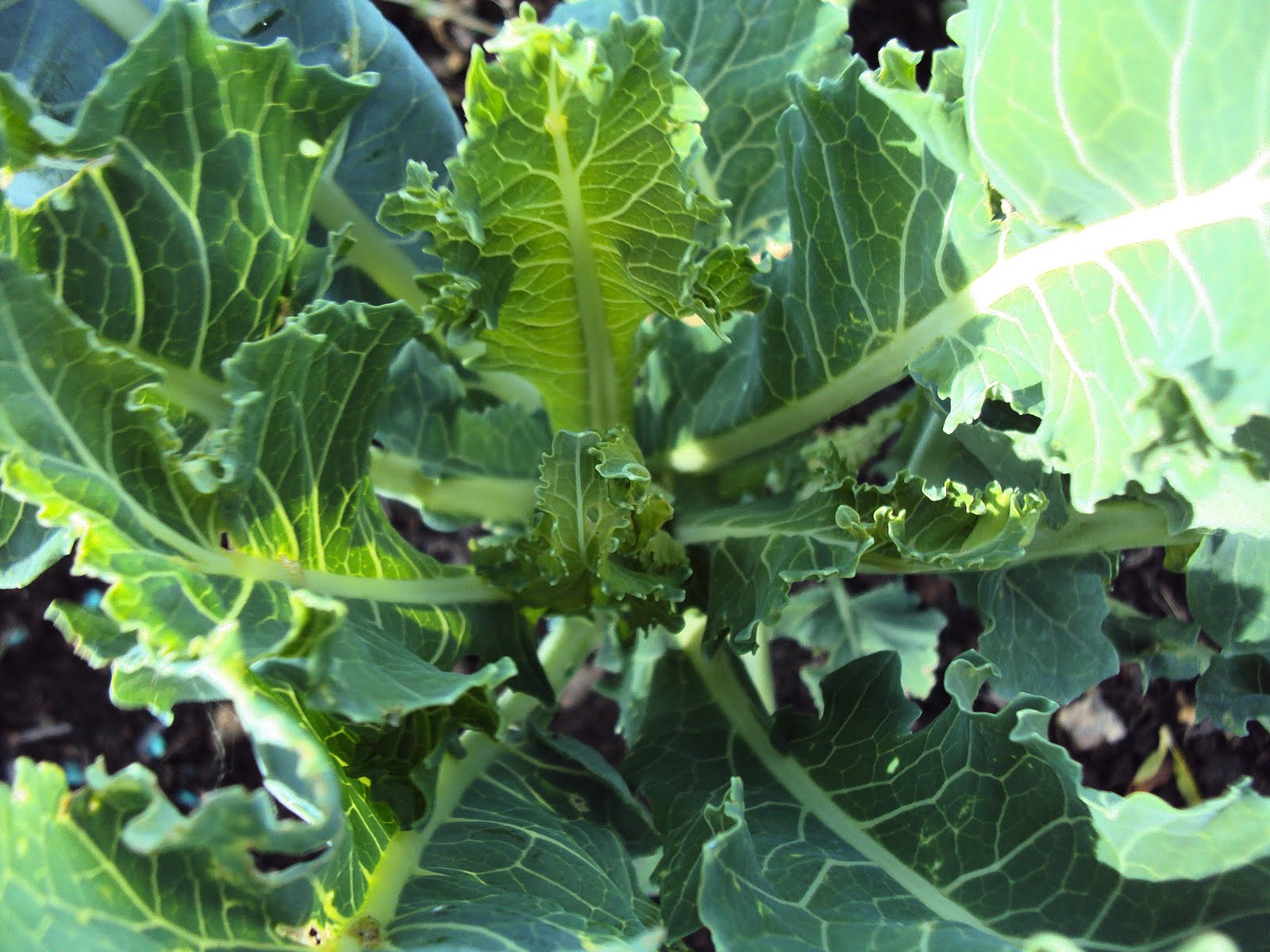
Remember my perennial kale, that drooped in the snowy weather? Despite lots of care, it didn't get better - the leaves went dry and crispy and I thought it had died. I was pretty miffed - it cost £5 plus £5 postage and it really should have withstood the cold weather better. Today, however, I spotted these new shoots coming from the base of the stem, so it looks like all is not lost after all! Hooray!


Sowing begins today - I'm planning a trough of mangetout, a tray of peas for shoots, two pots of parsley, a few early Swiss chard seeds in the greenhouse as an experiment, short rows of carrots, radishes, spinach and lettuce, and tomatoes and celery in the heated propagator. Really must get my broad bean seeds in at the plot soon too...

And to make space in the heated propagator, I've potted-on all my early chillies, peppers and aubergines. They're doing great and many are on their third pairs of leaves. I'm making a few extra sowings though, as one variety gave me zero germination (from seeds bought just last year!) and the ancho/poblano chillies, which I was really looking forward to, have only given me one seedling from ten seeds. Rubbish!


I'll leave these pots on the windowsill for now, to get used to not being heated from underneath, but as soon as we get some decent March sunshine I'll get them out into the greenhouse during the days and bring them in at night.

Saturday, 5 November 2011

Using Up Potatoes: Giant Rostis!

Every potato harvest inevitably comes with a few specimens damaged by sunlight, slugs, the fork that dug them up, or even by couchgrass roots, which burrowed a few holes through mine!


These should be separated from the undamaged potatoes and used first, as they're bound to go off sooner.

In an effort to use up our damaged spuds, of which we had really quite a few (and getting a little bored with mash) I thought I'd try to recreate a dish Eddie sampled in the fabulous veggie restaurant Terre a Terre recently:


(Disclaimer: My rosti may not be the same as/as good as Terre a Terre's, and certainly didn't look as good (theirs is pictured)... But it's still delish!) I altered it a bit to use up some watercress I had left over from something else, and it packs in even more flavour. Actually it's a really good dish to use up large amounts of spinach, watercress or any other similar leaf, as well as potatoes. You'll want at least 100g leaves per person and you could use much more if you wanted, so it's a good one for those bags/bunches of leaves the supermarkets and market stalls reduce at the end of the day too... It's a great, simple dish for one (though a bit of a juggling act if you're feeding a whole family) and a really tasty supper.

Giant Rostis with Watercress Sauce

  • Finely chop an onion and fry gently until really soft and golden, but not browned.
  • Grate around 200g potato per person, put it in a sieve or a clean tea towel and squeeze as much water out as you can.
  • Throw a couple of chopped garlic cloves in with the onion to soften.
  • Preheat your oven to 180C. 
  • Put the grated potato into a large bowl and season well. Add the chopped onion and garlic and gently combine (try not to break up or mash the potato too much!).
  • Divide the potato mixture into bowls - one per person. The shape of the bowls will shape the rostis.
  • Heat some oil in a non-stick frying pan, tip the first rosti in, and fry on a medium-high heat.
  • Once it is golden brown underneath, flip it over and do the other side. When that side is golden-brown too, put it on a large baking tray and do the next rosti...
  • When all your rostis are nicely browned, pop them in the oven to finish cooking in the middle while you make the sauce. (Maybe a more skilled or patient chef than I could cook them entirely in the frying pan, but because they're so big it seems to me they'd need this extra oven-time to cook right through.)
  • Meanwhile, wilt your leaves (100g-200g per person) down in a large saucepan with a knob of butter, salt and pepper, a splash of lemon juice and a little nutmeg. I used 2/3 watercress, 1/3 spinach, but you could use spinach only, or any combination really. I'm willing to bet chard, young kale, beetroot leaves, sorrel and any other similar leaf would work too (although sorrel really loses its colour when cooked so you might prefer to add it raw when pureeing).
  • When the leaves are cooked down, keep a couple of spoonsful aside for the garnish, and puree the rest (a wand-type blender is good for this). Add a spoonful or two of cream cheese (or a splash of cream and a little parmesan) and taste. Add more seasoning, cream/cheese or lemon juice if you so desire.
  • Poach (or soft-boil) your eggs.
  • When the rostis are done in the middle (ooh, about 15-25 minutes, depending how long you fried them for!), spread the sauce on each plate, top with a rosti, then a spoonful of wilted leaves, then a poached egg, and finally a generous handful of grated cheese!

To me this is great just as it is, but hardcore carnivores could be appeased with a sprinkling of crispy bacon bits or chopped ham. A nice piece of fish - especially smoked fish - would complement it very well too.

Tuesday, 24 May 2011

Up From the Grave

The 'Everlasting Cauliflower' I thought was dead has sent up two new shoots from the base!


It even looks like it's getting ready to make new heads.


Trouble is, what do I do about the nasty hollow stem? Will it rot if it gets full of rain? Will it harbour creepy crawlies? Should I block it up with something? Chop it off just above the new shoots?


We got a few jobs out of the way on the plot this weekend, although there's still a lot of digging to catch up on.

We earthed up the potatoes.


We weeded the broad beans. There, you can see what I mean about the righthand 'Bunyard's Exhibition' doing so much better than the lefthand 'Aquadulce' now. The string was originally there to stop pigeons nibbling the young shoots, but now it's providing a bit of support against the wind!


And we planted out the chard and some sorrel (foreground) in the little border by the salad beds. Ooh, and I pulled up all the bolted spinach from the salad bed and planted some perpetual spinach in its place.


Going to plant out the cucumbers today, and sow some marigolds and nasturtiums. I usually just let them self-seed, but I don't see any popping up this year and I can't have an allotment without marigolds and nasturtiums!


And I'm a sucker for a 3 for 2 deal!

Thursday, 19 May 2011

Allotment Update

Despite being way ahead of ourselves earlier in the season, it's a real struggle keeping up with things at the allotment at this time of year and we've got the usual mix of good and bad going on.

Good: the potatoes are doing well, and ready to be earthed up just as soon as I pluck all the bindweed out.


Good: I've planted the leeks out. 12 Autumn Giant, 12 Malabar F1 and 12 Musselburgh. These were sown in seed trays in late February.


We plant them in a grid, pushing a 6" deep hole in the soil using the end of a hoe, dropping the baby leek in and watering well. I do think some of them were still a bit small really, so fingers crossed they're not too swamped! I'm keeping the extra seedlings on standby just in case.


Bad: the spinach has gone to seed in the warm, dry weather, and I barely got to harvest any! Boooooo.


The chard is finished too, and will need clearing a.s.a.p. to make room for a new lot.


Good: the broad beans are thriving and flowering away. As always, please ignore the carpet of weeds...


The two lefthand rows are Aquadulce, the two righthand rows are Bunyards Exhibition. I know which one I'm growing next year!


Good: We've weeded the asparagus (again) and planted out the petunias (reputed to keep away the dreaded asparagus beetle).


Bad: the asparagus beetles are really going for it this year and causing serious damage. Some of this could be slug/snail damage too. I've never seen anything like this - the whole tips are gone!


Good: we've netted the strawberries, adopting a much simpler system than the rickety frame we constructed last year!


The net is simply draped over a few canes topped with plastic bottles, and weighed down round the edges with stones tied into the netting.


Good: I've direct-sown runner beans (Polestar) round the feet of four obelisks, and a few rows of French beans (Delinel) in front. Eddie's grandparents kindly sent us a few runner bean plants back at Eastertime, too. They've been getting a bit stressed and lanky in their little pots and will take some settling in, but they're out there now and will hopefully give us a small early crop!

Bad: we still have to finish digging the brassica patch and the three squash patches! The weeds have really taken over since last growing season and the soil is very hard and dry because of the weather we've been having, so progress is slow. I'd hoped to have cleared the paths and got some weed-proof membrane down on them by this time too, but I guess that can wait til everything else is sorted.

Wednesday, 4 May 2011

A Funny Old Business

Germination's a funny old business, isn't it? They say seeds need three (or four) things to wake from 'quiescence' (that's sleepy-time to you and me) and start growing:
  • Water - well that's the obvious one. All life needs water.
  • Warmth - although while peppers and squashes need a good warm room to do their thing, radishes and lettuces can germinate around 4 C. While we often associate higher soil temperatures with good germination, some seeds require a period of cold first. In other climates, some require a forest fire!
  • Air - yup, they need to breathe just like us, so soil mustn't be waterlogged, and seeds too deep won't grow. Some seeds have a hard outer shell that excludes air, and need a bit of wear or a hard frost to split the shell before germination can begin.
  • Light - not all seeds require light, but some do; for example woodland flowers which grow in very early spring while the trees are bare and the sunlight reaches the forest floor.
But is this a formula for success? We should be so lucky.

I've always thought myself quite fortunate when it comes to parsnip seeds (which have a particularly poor reputation when it comes to germination) but when I think about it now, it's not so surprising. I tend to plant a whole pack of seeds in a row - that's 150 or thereabouts - after all there's no point saving them for next year as they lose their vitality so quickly. Then later I thin them where they're too close together, but I'm hardly thinning 150 parsnips - maybe half that. It's just that I sow so thickly I seem to do well.

This year I station-sowed my parsnips in a grid, and though I have lots of healthy seedlings, several of the 'stations' are still empty. If only I hadn't used the whole pack... At least parsnip seed is cheap; I popped to Wilko's yesterday and (after weeding all the fat hen out of the bed) filled in the gaps with a second sowing.


My sweetcorn came up last week - every single seed I sowed, and within just a few days! Thank you Real Seeds!


Yet I am still waiting for any action in the summer savory pots (old seed, but still just about in date)...


...or from the poppies (brand new seed, and not cheap!). These were sown way back in March. Actually look - that one in the middle is doing something. Has that one had more water than the others? More light or air? A different temperature? Nope.


And germination's been really patchy (about 35%) from the 'Bright Lights' chard (three righthand rows) - just one year old - while the brand new perpetual spinach seeds (lefthand row and very closely related) have all come up without a problem.


My 'Baby Bear' pumpkin seeds from Mr Fothergills have been in the soil for weeks, and they're my second attempt - I was just getting ready to have a good old rant about it... Then suddenly, and in perfect synchrony, up they popped. (The first sowing still hasn't done anything, despite getting exactly the same indoor temperatures.)


Am I going somewhere with this? Sort of, I suppose...

If you're the kind of person that needs to be in control, don't try gardening. Like the grinding of tectonic plates or the power of the wind or the frost that probably turned my unfleeced strawberries to mush on the allotment last night or the snail-that-got-away munching down your brand new cucumber seedlings, we're at nature's mercy and we have to roll with the punches. In all things, it pays to be adaptable and flexible and to work with nature wherever possible, because one thing's for certain: it's not going out of its way to work with you!
Related Posts Plugin for WordPress, Blogger...