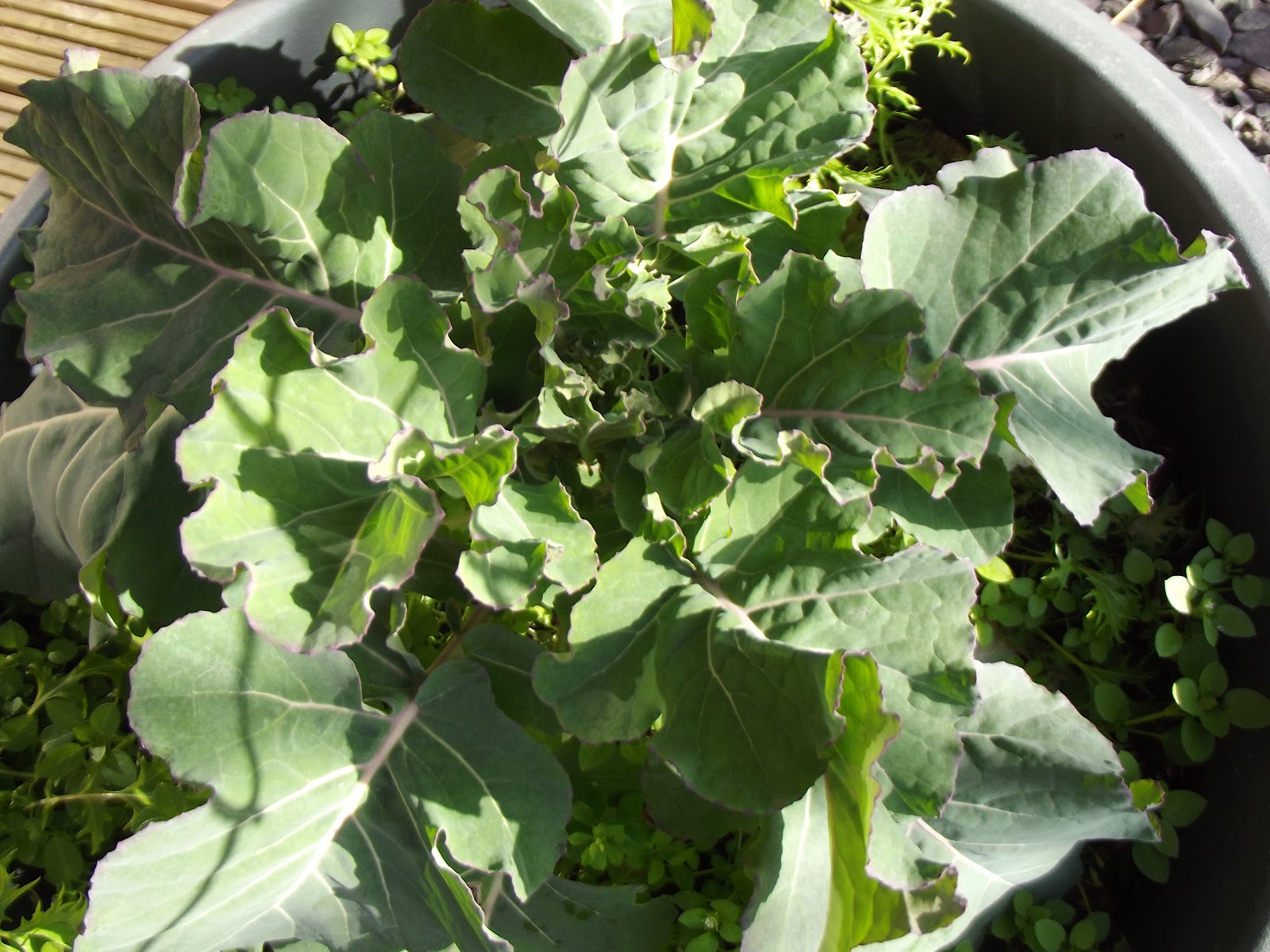
I don't feel quite right these days when I'm not actively growing things; in winter my green fingers begin to itch, and boredom and frustration creep in, and it's a huge relief when February arrives and I can justify getting a few early seeds started. I used to wait until mid-Feb - Charles Dowding recommends this as there are ten hours of daylight or more from this time and seedlings are less likely to get leggy - but I sometimes feel that my chillies and things are a bit behind, so this year I started sowing slightly earlier; at Imbolc, which marks the halfway point between the winter solstice and the spring equinox.
So here we are; my first (slightly leggy) seedlings are tucked up in the heated propagator, the seed potatoes are chitting, and I've even treated myself to a nice new cloche to get some things started early outside in the raised bed.
Last year I vowed not to bother with peppers and chillies this year and concentrate on plants that would actually crop for me instead; they're a lovely idea but without a polytunnel or greenhouse they just don't seem to be worth it here, and end up a waste of space. Of course, when I actually got round to sowing it was hard to stick to that decision - I just wanted to sow as many things as I could get away with, and I had to remind myself of those past failures! But I did allow myself two varieties: 'Basket of Fire' chillies, which I'll grow under a bell cloche to see if that helps them along, and some 'Ancho' chillies which I did really well with a couple of years ago. I also started some 'Bonica F1' aubergines, and two each of three early tomato varieties; 'Latah', 'Stupice' and 'Jen's Tangerine'. I'll sow some more when I sow the other tomatoes in March, and see if the early start really made any difference... Germination has been excellent, except from the 'Ancho' chilli seeds which are a bit old. I'll set the seedlings deeper when I pot them up, to counter the legginess.
I've also started some 'Monarch' celeriac, and some 'Golden Spartan' celery - a variety we saw looking particularly impressive at Wisley last autumn. (It's no guarantee we'll be able to replicate the success of the Wisley gardeners, of course!) We've never succeeded with celeriac yet, so let's hope it's third time lucky... These seeds are in an unheated propagator indoors on a windowsill.
Potato varieties chosen this year include 'Pentland Crown' and 'King Edward' which both did well for us previously, plus 'Desiree' on the recommendation of several Twitter friends. I've always steered clear of red-skinned potatoes, mostly due to a memory of eating them weirdly soaked in vinegar at a French friend's house as a child... But they've gotta be worth a try, right? For earlies to grow at home, I really wanted 'Accent' - we grow them at FoodSmiles and they produce extremely well and taste delicious - but couldn't seem to find them except by mail order, with a £5 delivery fee of course! So I settled on 'Home Guard'. Then, at Seedy Sunday in Brighton last weekend, there they were; I picked up not only six 'Accent' but six 'Yukon Gold' to try too! We certainly won't be short of potatoes this summer...
My new cloche is from Harrod Horticultural; a rigid plastic thing that slots together in sections, so I can extend it in future if I want, and it seems very sturdy indeed. It has indentations in the roof to collect rainwater and let it drip through tiny holes to water the plants, so it shouldn't dry out beneath and is easy to water, and it's so much simpler to handle than faffing about with fleece, which I detest. As soon as I've cleared space (the right space) on the raised bed, I'll get it in place, let the soil warm for a week or so, and then start sowing early carrots, spinach, lettuce, radishes, rocket and spring onions under it.
So off we go! Another growing season begins. Isn't it funny how every one is just as exciting as the last? :-)
Showing posts with label sowing seeds. Show all posts
Monday, 15 February 2016
Wednesday, 1 April 2015
Busy, busy!
Winter and early spring are great times for gardeners to do all sorts of non-growing jobs, like developing new areas and working on paths or buildings. I had a long list of these this year, and a long session on the allotment on Monday finally allowed us to finish up all but one of them. Just in time I'd say - 'early spring' is most definitely over now we've hit April!
We finally finished digging over what was previously our strawberry bed, which will be our flower patch this year and hopefully bring looooads more beneficial insects to the plot, as well as giving us flowers to cut and give away. I planted out the corncockle, calendula and clary sage I raised at home over winter, and I'll sow lots more here in a couple of weeks...
We've also planted up the herb patch round the pond and fruit trees. The focus here isn't on culinary herbs, as they're much more useful grown at home where you can grab them easily as you need them, but on flowering perennial herbs for insects and some herbs which I'd like to try drying for tea - lemon balm, camomile and peppermint. I've also popped a few perennial and self-sowing flowers in; some poached egg plant and primroses, an oriental poppy and an echinops. Maybe I should call it my 'companion plants patch' instead of my herb patch.
There's still a bit of work to do to get rid of the last of the grass in that corner by the pond... But it's so good to have this area looking nice again after it got swamped with grass and then we mulched it with manky cardboard over winter!
When we moved our compost bins last summer, there was a lot of good compost in the bottom that we just couldn't use at the time, so it's been heaped up in the place where the compost bins were ever since - we even grew our beans late last summer on the temporary raised bed it created...
...but now we've levelled the ground and moved the pile to this year's potato bed, where it will help build the soil. Our greenhouse will go in this spot this year. I hope the people on the next plot sort out their compost pile soon - it's a bit of a battle to stop it falling onto our plot, and there are brambles growing in it which keep finding their way into this bed.
While we were on the plot I also took the opportunity to sow some more seeds: I scattered some dill and parsley seeds in some carefully-chosen corners, and sowed beetroots, turnips and parsnips in rows in our roots bed, a foot apart, and covered with sieved compost.
Do you like my new plant labels? They look a bit industrial, but I was desperate to find something that would last for years, instead of perishing in the sun or rotting in the rain or just getting kicked about and lost in the dirt, and I hope these are the answer. They're from Amazon - I tried to find another supplier but couldn't - by a company called GardenMate. The permanent marker is supposed to last all season, and I'll be able to clean it off with a solvent cleaner to reuse them. That's the theory, anyway...
I'm happy that we have some broad beans on the plot at last, after a bit of a battle against mice eating the seeds! These were actually sown at home in a big seed tray at the beginning of March, and planted out this week. There are a few more sown direct here too, and covered with the same mesh to try to keep the rodents off this time. I have half a feeling I'm going to go down there and find little holes chewed right through the netting one of these days!
At home, I've sown lots more seeds, including celery, basil, dill, perpetual spinach, pea shoots and some more flowers; sunflowers, achillea and cerinthe. After a manic March, I think I've just about caught up with myself. The only things remaining are to clear and dig over the old asparagus bed, which is small and shouldn't take too long, and plant out my poor sweet peas which are getting desperate for some space and some support! Poor things!
I'm glad it's April now and the weather must warm up a bit more soon. I feel like I've got a bit of a holiday coming up over the long Easter weekend, and I'll probably get stuck into some more sowing: courgettes, squashes, brassicas and beans are next, as well as the bulk of the flower patch, getting the greenhouse sorted - and it'll be time to plant potatoes before we know it!
We finally finished digging over what was previously our strawberry bed, which will be our flower patch this year and hopefully bring looooads more beneficial insects to the plot, as well as giving us flowers to cut and give away. I planted out the corncockle, calendula and clary sage I raised at home over winter, and I'll sow lots more here in a couple of weeks...
We've also planted up the herb patch round the pond and fruit trees. The focus here isn't on culinary herbs, as they're much more useful grown at home where you can grab them easily as you need them, but on flowering perennial herbs for insects and some herbs which I'd like to try drying for tea - lemon balm, camomile and peppermint. I've also popped a few perennial and self-sowing flowers in; some poached egg plant and primroses, an oriental poppy and an echinops. Maybe I should call it my 'companion plants patch' instead of my herb patch.
There's still a bit of work to do to get rid of the last of the grass in that corner by the pond... But it's so good to have this area looking nice again after it got swamped with grass and then we mulched it with manky cardboard over winter!
When we moved our compost bins last summer, there was a lot of good compost in the bottom that we just couldn't use at the time, so it's been heaped up in the place where the compost bins were ever since - we even grew our beans late last summer on the temporary raised bed it created...
...but now we've levelled the ground and moved the pile to this year's potato bed, where it will help build the soil. Our greenhouse will go in this spot this year. I hope the people on the next plot sort out their compost pile soon - it's a bit of a battle to stop it falling onto our plot, and there are brambles growing in it which keep finding their way into this bed.
While we were on the plot I also took the opportunity to sow some more seeds: I scattered some dill and parsley seeds in some carefully-chosen corners, and sowed beetroots, turnips and parsnips in rows in our roots bed, a foot apart, and covered with sieved compost.
Do you like my new plant labels? They look a bit industrial, but I was desperate to find something that would last for years, instead of perishing in the sun or rotting in the rain or just getting kicked about and lost in the dirt, and I hope these are the answer. They're from Amazon - I tried to find another supplier but couldn't - by a company called GardenMate. The permanent marker is supposed to last all season, and I'll be able to clean it off with a solvent cleaner to reuse them. That's the theory, anyway...
I'm happy that we have some broad beans on the plot at last, after a bit of a battle against mice eating the seeds! These were actually sown at home in a big seed tray at the beginning of March, and planted out this week. There are a few more sown direct here too, and covered with the same mesh to try to keep the rodents off this time. I have half a feeling I'm going to go down there and find little holes chewed right through the netting one of these days!
At home, I've sown lots more seeds, including celery, basil, dill, perpetual spinach, pea shoots and some more flowers; sunflowers, achillea and cerinthe. After a manic March, I think I've just about caught up with myself. The only things remaining are to clear and dig over the old asparagus bed, which is small and shouldn't take too long, and plant out my poor sweet peas which are getting desperate for some space and some support! Poor things!
I'm glad it's April now and the weather must warm up a bit more soon. I feel like I've got a bit of a holiday coming up over the long Easter weekend, and I'll probably get stuck into some more sowing: courgettes, squashes, brassicas and beans are next, as well as the bulk of the flower patch, getting the greenhouse sorted - and it'll be time to plant potatoes before we know it!
Friday, 27 March 2015
Sowathon!
March has been a busy month for many reasons, and I've been way behind with seed-sowing for the new season, but in the last week I've squeezed in a few hours in the garden and taken the opportunity to catch up!
This time last week was the spring equinox, when the days become longer than the nights again (hurrah!), and it seemed like a good time to sow my tomato seeds. I potted up all the pepper, chilli and aubergine plants from the propagator - they're looking big and healthy and have been spending daytimes out in the plastic greenhouse (pic above) - and I sowed five varieties of tomatoes in their place: Amish Paste (a good cooking tomato, but tasty sliced as well), Dr Carolyn (delicious heritage variety!), Angelle (my favourite, from seeds saved from supermarket toms), Skykomish (a blight-resistant variety) and Indigo Rose (the 'black tomato', super-high in antioxidants). They all popped up in just four days and are growing away on the windowsill now. The electric propagator is a real help in getting warmth-loving seeds to germinate!
They look a bit leggy - I guess we've had some gloomy days lately - but they'll catch up with themselves and I'll plant them deep when I pot them up.
We spent a couple of hours topping up the big raised bed in the garden, with the last half-bag of the compost we bought for the purpose last year, plus a layer of new multi-purpose compost. I treated the bed with sulphur before sowing to try to begin lowering its high pH (see previous post), but I decided it might be overcautious to limit what I sow in it this year - after all, growth did seem to improve quite a lot during the course of last season, and the layer of fresh compost should help a bit too - so I'm trying a bigger variety of veg in it than I originally planned. It won't take long to see whether they grow well or not, and I can always resow something else later... The bed already contains some parsley, chives, garlic and perpetual spinach from last year, and I filled up the rest of the space with rows of carrots, turnips, lettuce, spring onions, komatsuna, watercress, spinach, kohlrabi, radishes and mustard.
I also sowed some more celeriac seeds. I had been hardening off my young celeriac plants, but then I read somewhere that if celeriac gets too cold in its first spring it can think it's in its second year, and go to flower rather than producing a good root. Last year's celeriac didn't actually go to flower, but it was a terrible failure and I wondered if my early-hardening-off could possibly be why... So this new set of seedlings will be coddled indoors until the temperatures are higher out there, and we'll see if it makes a difference!
The corner garden bed needed a good clear-up - it had quite a few weeds, last year's bean poles and old bean and pea plants, and some honeysuckle and snowberry invading fast. Once tidied, I sowed some peas and mangetout against the fence, and scattered mint leaves and chopped up dry mint stems over them to keep the mice away - it works a treat!
Finally, I sowed some chard, leaf celery and flowers (cerinthe and achillea) in cells in the plastic greenhouse, and planted some early 'Accent' potatoes in sacks. The potato shoots could be harmed by frost after they appear, so I'll need to keep an eye on them and keep earthing them up or throw fleece over them on cold nights. I've got six of these bags so I'll sow two more in two weeks, and two more two weeks later, to spread out my harvest a bit.
I'm nearly caught-up but there's still plenty more to do, and it'll be April in just a few days... In fact, I'd better get back out there!
This time last week was the spring equinox, when the days become longer than the nights again (hurrah!), and it seemed like a good time to sow my tomato seeds. I potted up all the pepper, chilli and aubergine plants from the propagator - they're looking big and healthy and have been spending daytimes out in the plastic greenhouse (pic above) - and I sowed five varieties of tomatoes in their place: Amish Paste (a good cooking tomato, but tasty sliced as well), Dr Carolyn (delicious heritage variety!), Angelle (my favourite, from seeds saved from supermarket toms), Skykomish (a blight-resistant variety) and Indigo Rose (the 'black tomato', super-high in antioxidants). They all popped up in just four days and are growing away on the windowsill now. The electric propagator is a real help in getting warmth-loving seeds to germinate!
They look a bit leggy - I guess we've had some gloomy days lately - but they'll catch up with themselves and I'll plant them deep when I pot them up.
We spent a couple of hours topping up the big raised bed in the garden, with the last half-bag of the compost we bought for the purpose last year, plus a layer of new multi-purpose compost. I treated the bed with sulphur before sowing to try to begin lowering its high pH (see previous post), but I decided it might be overcautious to limit what I sow in it this year - after all, growth did seem to improve quite a lot during the course of last season, and the layer of fresh compost should help a bit too - so I'm trying a bigger variety of veg in it than I originally planned. It won't take long to see whether they grow well or not, and I can always resow something else later... The bed already contains some parsley, chives, garlic and perpetual spinach from last year, and I filled up the rest of the space with rows of carrots, turnips, lettuce, spring onions, komatsuna, watercress, spinach, kohlrabi, radishes and mustard.
I also sowed some more celeriac seeds. I had been hardening off my young celeriac plants, but then I read somewhere that if celeriac gets too cold in its first spring it can think it's in its second year, and go to flower rather than producing a good root. Last year's celeriac didn't actually go to flower, but it was a terrible failure and I wondered if my early-hardening-off could possibly be why... So this new set of seedlings will be coddled indoors until the temperatures are higher out there, and we'll see if it makes a difference!
The corner garden bed needed a good clear-up - it had quite a few weeds, last year's bean poles and old bean and pea plants, and some honeysuckle and snowberry invading fast. Once tidied, I sowed some peas and mangetout against the fence, and scattered mint leaves and chopped up dry mint stems over them to keep the mice away - it works a treat!
Finally, I sowed some chard, leaf celery and flowers (cerinthe and achillea) in cells in the plastic greenhouse, and planted some early 'Accent' potatoes in sacks. The potato shoots could be harmed by frost after they appear, so I'll need to keep an eye on them and keep earthing them up or throw fleece over them on cold nights. I've got six of these bags so I'll sow two more in two weeks, and two more two weeks later, to spread out my harvest a bit.
I'm nearly caught-up but there's still plenty more to do, and it'll be April in just a few days... In fact, I'd better get back out there!
Monday, 23 February 2015
Stevia and Oysterleaf
After my chillies, peppers, aubergines and leeks, next on the list to sow this month were two unusual leaf crops; stevia and oysterleaf.
Stevia (stevia rebaudiana) is an extremely sweet-tasting leaf that can be used as a natural sweetener, 150 times sweeter than sugar. I was given some seeds last year but failed to get any to germinate - but ended up buying a small plant at a nursery later on in the summer. It didn't get very big and I didn't harvest more than a few leaves from it, but after its tiny white flowers faded I made sure to save some seeds for another attempt this year.
(Whole stevia leaf isn't approved by the Food Standards Agency as a food for human consumption - even though it's been eaten for centuries in South America and in Asia since the seventies - so it can't be marketed as food in its natural form. You can buy approved stevia extracts (you might have noticed the new Coca Cola 'Life' is part sweetened with a stevia derivative) but watch out for their purity. Truvia, the 'big brand' option marketed as a natural stevia-derived sweetener, has as its main component erythritol, a sugar alcohol similar to sorbitol, mannitol and xylitol, which is fermented from dextrose, a sugar made from corn.)
I haven't managed to find much out about how to sow the seeds, except that it's tricky and they need a lot of light. The seeds are very tiny, so I have sown some under a light sprinkling of soil and some on the surface. It's very easy for surface-sown seeds to dry out, so I've put the whole pot in a plastic bag to retain moisture, and I'm keeping them on a bright windowsill and crossing my fingers... If I have any success, I hope to experiment more with my harvest this year and find some good ways to use it! I'll also try to overwinter a plant (like I should have done last year!) to avoid the tricky germination game next year - I think they grow as perennials in warmer climates...
Oysterleaf (mertensia maritima) or 'sea bluebells' is another edible leaf crop, with round, blueish, fleshy leaves supposed to taste like - you guessed it - oysters. It's not to be confused with salsify - a root crop sometimes known as oysterplant! It's a perennial (you know I'm a sucker for perennial edibles!) and it has really pretty edible purple and blue flowers, similar to borage - it's in the same family. Again, I was given some seeds last year but failed to grow them successfully (I think a snail got them!) so it's round two this year, with seeds purchased from Pennard Plants. There were only five seeds in the pack, so again I'm having to be careful with them! The seeds are relatively big so I've sown them a few millimetres deep and I'm keeping a close eye on them to make sure they don't dry out. They're not going in a plastic bag, as they grow wild in the Hebrides so I don't think they want to be too warm. But I will be keeping them safely indoors, away from snails, this time! (Until they're bigger, anyway.)
In other seedy news, I've also now sown some stock and snapdragon seeds for my new flower patch, and my first aubergine seedlings popped up on Thursday, just five days after sowing, closely followed by the chillies and the leeks after seven days. It's all go!
Stevia (stevia rebaudiana) is an extremely sweet-tasting leaf that can be used as a natural sweetener, 150 times sweeter than sugar. I was given some seeds last year but failed to get any to germinate - but ended up buying a small plant at a nursery later on in the summer. It didn't get very big and I didn't harvest more than a few leaves from it, but after its tiny white flowers faded I made sure to save some seeds for another attempt this year.
(Whole stevia leaf isn't approved by the Food Standards Agency as a food for human consumption - even though it's been eaten for centuries in South America and in Asia since the seventies - so it can't be marketed as food in its natural form. You can buy approved stevia extracts (you might have noticed the new Coca Cola 'Life' is part sweetened with a stevia derivative) but watch out for their purity. Truvia, the 'big brand' option marketed as a natural stevia-derived sweetener, has as its main component erythritol, a sugar alcohol similar to sorbitol, mannitol and xylitol, which is fermented from dextrose, a sugar made from corn.)
I haven't managed to find much out about how to sow the seeds, except that it's tricky and they need a lot of light. The seeds are very tiny, so I have sown some under a light sprinkling of soil and some on the surface. It's very easy for surface-sown seeds to dry out, so I've put the whole pot in a plastic bag to retain moisture, and I'm keeping them on a bright windowsill and crossing my fingers... If I have any success, I hope to experiment more with my harvest this year and find some good ways to use it! I'll also try to overwinter a plant (like I should have done last year!) to avoid the tricky germination game next year - I think they grow as perennials in warmer climates...
Oysterleaf (mertensia maritima) or 'sea bluebells' is another edible leaf crop, with round, blueish, fleshy leaves supposed to taste like - you guessed it - oysters. It's not to be confused with salsify - a root crop sometimes known as oysterplant! It's a perennial (you know I'm a sucker for perennial edibles!) and it has really pretty edible purple and blue flowers, similar to borage - it's in the same family. Again, I was given some seeds last year but failed to grow them successfully (I think a snail got them!) so it's round two this year, with seeds purchased from Pennard Plants. There were only five seeds in the pack, so again I'm having to be careful with them! The seeds are relatively big so I've sown them a few millimetres deep and I'm keeping a close eye on them to make sure they don't dry out. They're not going in a plastic bag, as they grow wild in the Hebrides so I don't think they want to be too warm. But I will be keeping them safely indoors, away from snails, this time! (Until they're bigger, anyway.)
In other seedy news, I've also now sown some stock and snapdragon seeds for my new flower patch, and my first aubergine seedlings popped up on Thursday, just five days after sowing, closely followed by the chillies and the leeks after seven days. It's all go!
Friday, 20 February 2015
Chitting Potatoes
At the beginning of the month I bought my seed potatoes, and it's that time of year again when the pretty coloured bottles and candles on the bathroom windowsill get packed away...
...to make room to chit my potatoes!
Chitting potatoes makes them develop nice strong shoots so that they start growing faster when you stick them in the ground. Just lay them out in a bright place. Too dark and they'll grow long spindly shoots that break easily, but put them in direct sunlight and the delicate new shoots might shrivel. This north-east facing windowsill is perfect. They get damp whenever someone has a shower, but they dry out again and don't seem to mind. Here's what they look like after nearly three weeks. You can see tiny rolls of new green leaves starting to form, and the little-white-bump beginnings of new roots.
Some people like to debate whether chitting is a good thing to do or a waste of the potatoes' energy which creates a risk of shocking the spuds when you put them in the cold ground. Some major gardening organisations have run tests to see how much difference it made, and found it generally didn't. But I mainly do it because, well, they've gotta go somewhere, right? And I do like to buy them early, so I can get the varieties I want and I'm not left with the shrivelled up manky ones, and it does help to check that they're all healthy and find out which eyes are strongest (I'll plant those facing upwards), and it's good to feel like I'm making a start on the growing season nice and early, even if it is just putting potatoes on a windowsill... I've also read somewhere that chitting stimulates production of solanine in the spuds, which makes them less appealing to any hungry rodents that might eat them after planting, and stops them rotting in the soil. Some people like to sit their seed potatoes in the cups of egg boxes, or even buy special chitting trays, to keep them all neat and tidy with their best eyes standing straight up. I just cram them all together, eyes up-ish - they take up less room that way, they don't mind touching each other and the chits will always grow upwards...
We've grown Kestrel potatoes for a few years now - they seemed to do best on our plot and they taste delicious, especially as mash and roasties. But when we tried Pentland Crown on a quarter of our potato bed last year in the search for a better jacket potato, they did really well too, and suffered much less scab and took longer to soften and sprout in storage, so we decided it was time to branch out and see what we were missing with some more new varieties...
So our maincrop spuds this year are a third King Edward, a third Sante and a third Pentland Crown. We bought them from our local independent garden centre, Aylett Nurseries, where you can select individual tubers and fill a bag for a set price. We got 60 tubers for £3.95! Much better than buying online!
We did buy some seed spuds online too, though. At FoodSmiles last year I was really impressed by a particular first early potato called Accent, which gave huge yields and tasted lovely, so I sought it out and found it at Tuckers Seeds. They arrived last week too, and are chitting on another windowsill. They'll be grown at home, in sacks.
I've also found some leftover seed potatoes from last year which I left in the summer house when we didn't have room for them. I can't remember what they are and I'm not sure I'll grow them, but you can see, even a year after buying them, they're still raring to go, having been kept in the right bright but cool conditions!
...to make room to chit my potatoes!
Chitting potatoes makes them develop nice strong shoots so that they start growing faster when you stick them in the ground. Just lay them out in a bright place. Too dark and they'll grow long spindly shoots that break easily, but put them in direct sunlight and the delicate new shoots might shrivel. This north-east facing windowsill is perfect. They get damp whenever someone has a shower, but they dry out again and don't seem to mind. Here's what they look like after nearly three weeks. You can see tiny rolls of new green leaves starting to form, and the little-white-bump beginnings of new roots.
Some people like to debate whether chitting is a good thing to do or a waste of the potatoes' energy which creates a risk of shocking the spuds when you put them in the cold ground. Some major gardening organisations have run tests to see how much difference it made, and found it generally didn't. But I mainly do it because, well, they've gotta go somewhere, right? And I do like to buy them early, so I can get the varieties I want and I'm not left with the shrivelled up manky ones, and it does help to check that they're all healthy and find out which eyes are strongest (I'll plant those facing upwards), and it's good to feel like I'm making a start on the growing season nice and early, even if it is just putting potatoes on a windowsill... I've also read somewhere that chitting stimulates production of solanine in the spuds, which makes them less appealing to any hungry rodents that might eat them after planting, and stops them rotting in the soil. Some people like to sit their seed potatoes in the cups of egg boxes, or even buy special chitting trays, to keep them all neat and tidy with their best eyes standing straight up. I just cram them all together, eyes up-ish - they take up less room that way, they don't mind touching each other and the chits will always grow upwards...
We've grown Kestrel potatoes for a few years now - they seemed to do best on our plot and they taste delicious, especially as mash and roasties. But when we tried Pentland Crown on a quarter of our potato bed last year in the search for a better jacket potato, they did really well too, and suffered much less scab and took longer to soften and sprout in storage, so we decided it was time to branch out and see what we were missing with some more new varieties...
So our maincrop spuds this year are a third King Edward, a third Sante and a third Pentland Crown. We bought them from our local independent garden centre, Aylett Nurseries, where you can select individual tubers and fill a bag for a set price. We got 60 tubers for £3.95! Much better than buying online!
We did buy some seed spuds online too, though. At FoodSmiles last year I was really impressed by a particular first early potato called Accent, which gave huge yields and tasted lovely, so I sought it out and found it at Tuckers Seeds. They arrived last week too, and are chitting on another windowsill. They'll be grown at home, in sacks.
I've also found some leftover seed potatoes from last year which I left in the summer house when we didn't have room for them. I can't remember what they are and I'm not sure I'll grow them, but you can see, even a year after buying them, they're still raring to go, having been kept in the right bright but cool conditions!
Saturday, 14 February 2015
Seed Sowing!
At last! The day is here! I've been itching to get starting with this season's seeds since, ooooh, about the second of January, but there's really not much point starting that early and seedlings grown when days are short can end up leggy and weak. Instead, I've taken on board a tip from veg-growing guru Charles Dowding, who advises waiting until there are ten hours of daylight each day before sowing seeds. This happens in mid February, and I've certainly noticed the evenings lengthening these last two weeks so hopefully it will make all the difference.
I like a good clear rule like this - it means no umming and aahing about whether or not it's the right time, no 'well I'll do a few now and a few later and see if there's any difference', no worrying.
Setting myself a clear day to get started - and making it a bit later than perhaps I'd like - has also meant I was far more organised than usual beforehand. I'd cleaned and tested the electric propagator in advance. I'd sorted out all my pots, and I've got a big bag of surplus ready to give away. I'd even written out my plant labels - I usually put the seeds in first then find myself writing labels with grubby fingers while trying to remember which pot's which - not clever!
I've also written up a sowing and planting plan for the whole year, which I'll use to keep records of the dates I actually sow as well. I can see at-a-glance what needs to be sown and where each month, so there'll be no forgetting things or puzzling over when to sow things for winter. I'm sure it'll get tweaked a bit along the way, but you can see it here if you like.
I sow all my seeds in peat-free compost - usually New Horizon organic peat-free. Peat-free seems to have a bad rap in the press - they'll tell you it's not suitable for seed-sowing, or that you have to sieve it and add vermiculite and water more, as if it's somehow more complex or more dangerous - but I've never, ever had any trouble with it; it's really very good stuff. And digging up peat is destructive, unsustainable, and totally unnecessary.
So here they all are. Tucked up in the electric propagator are three sweet peppers (Marconi Rossa, Lipstick and Kaibi Round), three chillies (Ancho Grande, Jalapeno and Big Jim Numex), and one aubergine (Bonica F1). They all need a bit of extra warmth to germinate well, so the electric propagator is really helpful, and I hope to be able to pot them up just in time to sow my tomatoes in the same propagator sometime around mid-March. On the windowsill are cape gooseberries, two pots of leeks (Autumn Giant Porvite and Lyon 2 Prizetaker) and some celeriac (Monarch). I've sown these things first as they are all slow-growing crops that need an early start in order to crop in good time, or to reach a good size.
Hooray! Getting these seeds started is a really good feeling and makes the spring feel that much closer. There's nothing else quite like the promise of big beautiful plants and tasty harvests just from putting a seed in the soil.
I like a good clear rule like this - it means no umming and aahing about whether or not it's the right time, no 'well I'll do a few now and a few later and see if there's any difference', no worrying.
Setting myself a clear day to get started - and making it a bit later than perhaps I'd like - has also meant I was far more organised than usual beforehand. I'd cleaned and tested the electric propagator in advance. I'd sorted out all my pots, and I've got a big bag of surplus ready to give away. I'd even written out my plant labels - I usually put the seeds in first then find myself writing labels with grubby fingers while trying to remember which pot's which - not clever!
I've also written up a sowing and planting plan for the whole year, which I'll use to keep records of the dates I actually sow as well. I can see at-a-glance what needs to be sown and where each month, so there'll be no forgetting things or puzzling over when to sow things for winter. I'm sure it'll get tweaked a bit along the way, but you can see it here if you like.
I sow all my seeds in peat-free compost - usually New Horizon organic peat-free. Peat-free seems to have a bad rap in the press - they'll tell you it's not suitable for seed-sowing, or that you have to sieve it and add vermiculite and water more, as if it's somehow more complex or more dangerous - but I've never, ever had any trouble with it; it's really very good stuff. And digging up peat is destructive, unsustainable, and totally unnecessary.
So here they all are. Tucked up in the electric propagator are three sweet peppers (Marconi Rossa, Lipstick and Kaibi Round), three chillies (Ancho Grande, Jalapeno and Big Jim Numex), and one aubergine (Bonica F1). They all need a bit of extra warmth to germinate well, so the electric propagator is really helpful, and I hope to be able to pot them up just in time to sow my tomatoes in the same propagator sometime around mid-March. On the windowsill are cape gooseberries, two pots of leeks (Autumn Giant Porvite and Lyon 2 Prizetaker) and some celeriac (Monarch). I've sown these things first as they are all slow-growing crops that need an early start in order to crop in good time, or to reach a good size.
Hooray! Getting these seeds started is a really good feeling and makes the spring feel that much closer. There's nothing else quite like the promise of big beautiful plants and tasty harvests just from putting a seed in the soil.
Wednesday, 1 May 2013
URGENT: Save Our Seeds
On May 6th, the EU will vote on new legislation governing plant varieties, proposed by the Directorate-General for Health and Consumers in response to hard lobbying by the globalised agricultural seed industry - Monsanto and its buddies. This legislation will mean that no seed (or other plant reproductive material) can be sold, swapped or given for free to anyone anywhere in the EU
unless it is registered on the EU Plant List as an 'approved' variety.
If the legislation passes, it will kill off innumerable heirloom, heritage and amateur varieties. It won't (I believe) impact the varieties already licensed for commercial use, but it will impact the huge number of 'amateur' varieties, all those that breed plants on a small scale at home, all those that forage seed and propagate wild plants, and all the rare seeds being preserved and brought back to cultivation by small businesses. It will mean high costs for seed merchants to put their varieties through rigorous tests to get them on the list - and since the tests are designed around high-output industrial varieties, many are unlikely to be approved anyway. Once a variety is approved, the seller will have to pay an annual fee to keep it that way. Heirloom varieties and other less-popular varieties will undoubtedly be lost. Small seed merchants preserving and supplying rare varieties will undoubtedly not be able to continue. Biodiversity will fall dramatically. Consumer choice will be reduced. Food security will be damaged. With every variety that dies out, the pool of genetic material for breeding future varieties will be diminished. That unique heirloom bean your grandfather gave you will be outlawed - it will be illegal to pass it on to anyone else. There'll be no seeking out local varieties when you move to a new area. There'll be none of the seed-saving and -swapping and -sharing that we growers enjoy so much - unless they're on the EU Plant List. And all this so that agricultural giants can make more money and take yet more control of our food supply.
This legislation flies in the face of nature, which propagates, adapts and evolves freely, constantly creating sub-species and sub-sub-species. It's an attempt by corporations to claim ownership of the plant world, and it's an assault on our right as earth-dwellers to enjoy and interact with the earth's natural world.
I personally grow many unusual and heritage varieties which are at risk; seeds I've saved myself and seeds I've bought from Real Seeds and others - many listed as 'amateur' varieties 'not for commercial exploitation', which Real Seeds must get round by charging 1p per year to join their 'club'. Many of these are my favourite varieties. I have a Caucasian vining spinach plant which I've only ever seen shared informally and sold by one-woman company Backyard Larder. I suspect most of these varieties would quickly become endangered if the legislation passes, and next year I'd have to grow a dramatically different selection.
I'd like to think there's no way this insane law would pass when put to the vote, but Monsanto seems to have ways to get anything it wants. I have had no replies so far to my letters to MEPs and it's simply too important an issue to just wait and see without expressing my opposition.
Whether or not you grow food yourself, this legislation has implications for your food security, the natural world all around you, and thus the future of the planet. PLEASE inform yourselves about this issue and TAKE ACTION.
Here are some links to help you:
Please share this post. We must not let this happen.
If the legislation passes, it will kill off innumerable heirloom, heritage and amateur varieties. It won't (I believe) impact the varieties already licensed for commercial use, but it will impact the huge number of 'amateur' varieties, all those that breed plants on a small scale at home, all those that forage seed and propagate wild plants, and all the rare seeds being preserved and brought back to cultivation by small businesses. It will mean high costs for seed merchants to put their varieties through rigorous tests to get them on the list - and since the tests are designed around high-output industrial varieties, many are unlikely to be approved anyway. Once a variety is approved, the seller will have to pay an annual fee to keep it that way. Heirloom varieties and other less-popular varieties will undoubtedly be lost. Small seed merchants preserving and supplying rare varieties will undoubtedly not be able to continue. Biodiversity will fall dramatically. Consumer choice will be reduced. Food security will be damaged. With every variety that dies out, the pool of genetic material for breeding future varieties will be diminished. That unique heirloom bean your grandfather gave you will be outlawed - it will be illegal to pass it on to anyone else. There'll be no seeking out local varieties when you move to a new area. There'll be none of the seed-saving and -swapping and -sharing that we growers enjoy so much - unless they're on the EU Plant List. And all this so that agricultural giants can make more money and take yet more control of our food supply.
This legislation flies in the face of nature, which propagates, adapts and evolves freely, constantly creating sub-species and sub-sub-species. It's an attempt by corporations to claim ownership of the plant world, and it's an assault on our right as earth-dwellers to enjoy and interact with the earth's natural world.
I personally grow many unusual and heritage varieties which are at risk; seeds I've saved myself and seeds I've bought from Real Seeds and others - many listed as 'amateur' varieties 'not for commercial exploitation', which Real Seeds must get round by charging 1p per year to join their 'club'. Many of these are my favourite varieties. I have a Caucasian vining spinach plant which I've only ever seen shared informally and sold by one-woman company Backyard Larder. I suspect most of these varieties would quickly become endangered if the legislation passes, and next year I'd have to grow a dramatically different selection.
I'd like to think there's no way this insane law would pass when put to the vote, but Monsanto seems to have ways to get anything it wants. I have had no replies so far to my letters to MEPs and it's simply too important an issue to just wait and see without expressing my opposition.
Whether or not you grow food yourself, this legislation has implications for your food security, the natural world all around you, and thus the future of the planet. PLEASE inform yourselves about this issue and TAKE ACTION.
Here are some links to help you:
- I recommend reading Real Seeds' excellent article for more information, including a link to the full proposal and some important notes on the text.
- The Soil Association's comment is brief, to the point and well worth a read.
- Garden Organic has a good article on the subject and a sample letter you can send to the EU's UK Commissioner Catherine Ashton.
- You can also write to your local Members of European Parliament at Write To Them.
- It doesn't hurt to write, too, to international MEPs - you can find their addresses and some more sample letters in this article from Open Source Seeds.
- The international Campaign for Seed Sovereignty has a petition here you can sign, there is one at 38 Degrees and there are two at Avaaz: one here which I have to say I'm concerned is worded rather shoddily but has the most support so far, and one which carries the message "We Will Not Comply!"
Please share this post. We must not let this happen.
Tuesday, 10 April 2012
How to Grow Tomatoes - 10 Simple Rules
I write this primarily for several friends who have taken, or are about to take, spare tomato plants off my hands and who have asked for full instructions on how to look after them, but hopefully lots more people will find it useful too! For some it can be daunting growing things for the first time, or growing things you've never grown before, but really most plants' needs are very simple and as long as you know what those needs are, it doesn't have to be daunting at all!
Here are the needs of a tomato plant:
That's really all you need to know, but if you want more, here's the long version...
Sowing Tomatoes
Tomato seeds need heat to germinate and must be sown indoors, anytime from January to early April, and kept above 10C. Fill small pots (3" is ideal) with clean, new compost, firm it down gently and water it. Then use your fingertip or a pencil to poke a shallow hole, 3-5mm deep, in the middle of the soil in each pot. Drop two seeds into each hole and add a pinch of fine compost or vermiculite to fill it in, or simply 'pinch' the hole carefully closed. Place in a propagator or cover the pots with plastic wrap to retain moisture until the seedlings have appeared - or simply water very lightly with a spray bottle twice a day to stop the surface drying out.
Seedlings will usually appear within a week, and definitely within two. Remove the plastic covering as soon as you see them and keep seedlings in a sunny place - if they don't have enough light they will reach for more and grow very tall and 'leggy' very quickly, which will give them weak stems unable to support the plants properly. When the temperature is above 10C during the day, it's ideal to put them outside in full sun, but keep them out of strong winds and heavy rain/hail showers until they're bigger, and don't forget to bring them in again at night! If two seeds have germinated in the same pot, wait until they grow their first true leaves then select the stronger one and pinch the weaker one off at soil level.
If you prefer, you can sow into smaller pots, cells, or a seed tray. When the plants are big enough to handle, though, they should be carefully transplanted to larger individual pots.
Planting Out
Tomatoes don't like cold temperatures and frost will kill them, so keep them protected from cold but in plenty of sun until the risk of frost has passed. If you will be growing them outdoors, check the last-frost date in your area and wait until then before planting out. In my area, it's early- to mid-May. But if you plant them outside and then a late frost is forecast, don't panic - covering your plants gently with newspaper, a sheet or a towel (don't squash them!) is often enough to protect them. If you're going to be growing them in a heated greenhouse or conservatory, you will be able to plant them out much earlier - as soon as night temperatures in it are reliably around 10C. Plants should be at least 6"/15cm tall before planting out, and you should 'harden them off' for 7-10 days by putting them outside during the day, to gradually get them used to outdoor temperatures and winds.
Like virtually all fruiting crops, tomatoes need lots of sun, so pick a spot for them that gets at least six to eight hours of direct sun a day - the more the better.
I think the easiest way to grow tomatoes is in a growbag, and you can now get growbags specially formulated for growing veg in, which I highly recommend. Roll the growbag on its side to break up the compacted soil, put it in position, then cut holes for your plants and scoop the soil aside to make holes big enough for the tomato plants. Water your tomatoes before planting out to reduce stress, and try not to expose the roots to direct sunlight or leave them sitting around out of a pot for any longer than necessary. Pop them in the holes in the growbag, level and firm the soil around them, and water the growbag well.
See all the little hairs around the bottom of the tomato plant stem? If you plant it deeper than it was before, those hairs will grow into extra roots and give you an even stronger plant!
Tomatoes can also, of course, be grown in pots or in the soil in your garden - just make sure you use good compost to provide nutrients and retain moisture. Plant them around 12"/30cm apart.
Stick a cane in the ground as close as you can to each stem without damaging the roots. This is tricky in growbags as they are not very deep - try sticking the cane right through the bag into the ground, or check out the various types of cane support you can buy or make. As the plant grows taller, tie it loosely to the cane every 9-12" to support the weight of all that lovely fruit you're going to get! Another way to do it is to fix a stake or post every two or three plants, and tie strings between them that pass both sides of the stems. Look up 'Florida weave' for examples of this.
Caring For Your Plants
Uneven watering can cause fruit to split, so try to water regularly. Even in heavy rain, growbags and pots don't tend to catch that much water, so while your plants are fruiting, water them the same amount every day or two, whatever the weather. Growbags can be tricky to water - it sometimes just runs off. I remedy this by cutting the bottoms off plastic bottles and burying them neck down in the soil next to the plants - watering into these takes water straight to the roots where it's most needed, and allows the water to soak in gradually rather than running away.
Many gardeners apply a tomato feed every week or two starting from when the first flowers open - this will encourage maximum fruiting. Using growbags already formulated for tomato-growing, I find this unnecessary, but who knows, maybe I'm missing out on an even bigger crop! Seaweed extract treatments are also particularly good for tomatoes.
Most tomato plants need pruning to keep plants focussed on fruit-production. (If your tomatoes are 'determinate', bush or tumbling varieties, they do not need pruning, but the ones I have given my friends are 'indeterminate' which means the plants will just branch out more and more, endlessly, so pruning is important.) Don't panic - it's very easy! What you're aiming for is a straight upright stem with only leaves, flower trusses and fruit trusses growing from it, like this:
When you see an extra shoot, or 'sucker', forming at the base of a leaf, like this...
Just pinch it off, like this...
If you do this carefully and don't damage the hairs on the stem, you can plant these prunings in pots of compost and grow whole new plants! (They may look like they're dying to start with, but they'll bounce back with a little TLC.) If you don't remove these extra shoots, your plant will end up with lots of extra branches and lots of extra leaf growth, will become tangled and unmanageable and will make your plant more susceptible to fungal infection...
Tomatoes are prone to a fungal disease called tomato blight, especially when grown outdoors, which starts as spots on the leaves, spreads to the stems and will eventually turn the fruit black. Rain carries airborne blight spores down to the leaves and soil, and the infection sets in during hot, humid spells. To decrease the chances of disease, try not to get the leaves wet when watering, and keep plants pruned so that they are well-ventilated and dry quickly after rain. If the lower leaves hang down to touch the soil, snip them off, and if any leaves turn yellow or develop brown or black patches, remove them too. Don't spread infection by touching infected parts and then touching non-infected parts, or by letting an infected plant touch others. If you think your plants may be infected, or during a period of more than 48 hours of hot, humid weather, spray your plants with a 1:1 milk and water solution, or 3 tbsps bicarbonate of soda and 1 tsp washing-up liquid to a gallon of water, to raise the alkalinity of the leaf surfaces and make it harder for fungi to take hold - or of course you could use a chemical fungicide. You can do this every week and after rain to prevent blight, or more often to slow its progess once infected. Spray in the evening or early morning, and always out of direct sunlight. Blightwatch.co.uk offers a free service to warn you when the weather conditions are just right for blight to hit your postcode so you can take precautions - give it a try!
If your indoor tomatoes are attacked by whitefly, grow basil around them - the flies hate it. Outdoor tomatoes don't tend to suffer much pest damage, but keep an eye out for slugs, snails, caterpillars and aphids just in case. Encouraging ladybirds in your garden is the most natural way to deal with aphids, but squishing them by hand is also very effective. Slugs, snails and caterpillars are best dealt with manually too - you'll need to go out after dark with a torch to catch slugs and snails - or you could use beer traps or organic slug pellets.
If you're growing tomatoes indoors, you will have to either open doors and windows wide during warm days to let pollinating insects in, or pollinate by hand. This is really easy - tomatoes are self pollinating, meaning they only need their own pollen to reach their own stigma, so it can be done simply by shaking flower trusses, flicking or blowing into the flowers, or by vibrating the flowers with the back of an electric toothbrush or an electric razor with the blade removed to mimic a buzzing bee! Do this every few days when flowers are opening. If you're growing outdoors, bees and other insects will do this for you. If you don't have many bees in your garden, you can attract them by growing more flowers! Here is a list of flowers which help to attract bees. Marigolds, poached-egg plant, poppies, borage, sunflowers and cornflowers are particularly good and easy to grow.
Harvesting
Harvest your tomatoes when they're fully red (if, that is, you're growing a red variety!), but try not to let any overripen on the plant, which may stall further fruiting. Keep your harvested tomatoes at room temperature - the fridge ruins their sweetness!
If you keep harvesting and pruning your plants, they'll keep producing right up until the first frosts around October or November. Enjoy them, and good luck!
And why not try saving your own seeds for more free tomato plants next year? Just click here and follow the instructions!
Here are the needs of a tomato plant:
- Warmth. Keep above 5C, preferably 10C, and only plant outside when the risk of frost has passed.
- Sun. Always keep them in a sunny location.
- Good compost, which provides nutrients and retains moisture.
- Support (except with tumbling types), to help the plant bear the weight of its fruit.
- Dryness. Avoid getting the leaves wet where possible. A greenhouse is ideal but not by any means vital. Good pruning promotes air circulation which will help plants to dry quickly.
- Pollination. Outdoors, bees will do this for you. Indoors, just shake the flowers!
- Regular watering. Fruits need lots of water to swell, and irregular watering can cause fruit to split, so water the same amount every day as far as possible.
- Food. While not vital, applying tomato feed once a week can get you a better crop.
- Pruning. Pinch out extra shoots or 'suckers' from leaf joints to provide good air circulation and focus energy on fruit-production.
- Protection from fungal infection. Remove any leaves that drag on the soil and any that show signs of disease. Consider using a fungicidal spray (bought or homemade - see below) to protect your plants during humid weather.
That's really all you need to know, but if you want more, here's the long version...
Sowing Tomatoes
Tomato seeds need heat to germinate and must be sown indoors, anytime from January to early April, and kept above 10C. Fill small pots (3" is ideal) with clean, new compost, firm it down gently and water it. Then use your fingertip or a pencil to poke a shallow hole, 3-5mm deep, in the middle of the soil in each pot. Drop two seeds into each hole and add a pinch of fine compost or vermiculite to fill it in, or simply 'pinch' the hole carefully closed. Place in a propagator or cover the pots with plastic wrap to retain moisture until the seedlings have appeared - or simply water very lightly with a spray bottle twice a day to stop the surface drying out.
Seedlings will usually appear within a week, and definitely within two. Remove the plastic covering as soon as you see them and keep seedlings in a sunny place - if they don't have enough light they will reach for more and grow very tall and 'leggy' very quickly, which will give them weak stems unable to support the plants properly. When the temperature is above 10C during the day, it's ideal to put them outside in full sun, but keep them out of strong winds and heavy rain/hail showers until they're bigger, and don't forget to bring them in again at night! If two seeds have germinated in the same pot, wait until they grow their first true leaves then select the stronger one and pinch the weaker one off at soil level.
If you prefer, you can sow into smaller pots, cells, or a seed tray. When the plants are big enough to handle, though, they should be carefully transplanted to larger individual pots.
Ready to plant out...
Planting Out
Tomatoes don't like cold temperatures and frost will kill them, so keep them protected from cold but in plenty of sun until the risk of frost has passed. If you will be growing them outdoors, check the last-frost date in your area and wait until then before planting out. In my area, it's early- to mid-May. But if you plant them outside and then a late frost is forecast, don't panic - covering your plants gently with newspaper, a sheet or a towel (don't squash them!) is often enough to protect them. If you're going to be growing them in a heated greenhouse or conservatory, you will be able to plant them out much earlier - as soon as night temperatures in it are reliably around 10C. Plants should be at least 6"/15cm tall before planting out, and you should 'harden them off' for 7-10 days by putting them outside during the day, to gradually get them used to outdoor temperatures and winds.
Like virtually all fruiting crops, tomatoes need lots of sun, so pick a spot for them that gets at least six to eight hours of direct sun a day - the more the better.
I think the easiest way to grow tomatoes is in a growbag, and you can now get growbags specially formulated for growing veg in, which I highly recommend. Roll the growbag on its side to break up the compacted soil, put it in position, then cut holes for your plants and scoop the soil aside to make holes big enough for the tomato plants. Water your tomatoes before planting out to reduce stress, and try not to expose the roots to direct sunlight or leave them sitting around out of a pot for any longer than necessary. Pop them in the holes in the growbag, level and firm the soil around them, and water the growbag well.
See all the little hairs around the bottom of the tomato plant stem? If you plant it deeper than it was before, those hairs will grow into extra roots and give you an even stronger plant!
Tomatoes can also, of course, be grown in pots or in the soil in your garden - just make sure you use good compost to provide nutrients and retain moisture. Plant them around 12"/30cm apart.
Stick a cane in the ground as close as you can to each stem without damaging the roots. This is tricky in growbags as they are not very deep - try sticking the cane right through the bag into the ground, or check out the various types of cane support you can buy or make. As the plant grows taller, tie it loosely to the cane every 9-12" to support the weight of all that lovely fruit you're going to get! Another way to do it is to fix a stake or post every two or three plants, and tie strings between them that pass both sides of the stems. Look up 'Florida weave' for examples of this.
Caring For Your Plants
Uneven watering can cause fruit to split, so try to water regularly. Even in heavy rain, growbags and pots don't tend to catch that much water, so while your plants are fruiting, water them the same amount every day or two, whatever the weather. Growbags can be tricky to water - it sometimes just runs off. I remedy this by cutting the bottoms off plastic bottles and burying them neck down in the soil next to the plants - watering into these takes water straight to the roots where it's most needed, and allows the water to soak in gradually rather than running away.
Splitting caused by irregular watering.
Many gardeners apply a tomato feed every week or two starting from when the first flowers open - this will encourage maximum fruiting. Using growbags already formulated for tomato-growing, I find this unnecessary, but who knows, maybe I'm missing out on an even bigger crop! Seaweed extract treatments are also particularly good for tomatoes.
Most tomato plants need pruning to keep plants focussed on fruit-production. (If your tomatoes are 'determinate', bush or tumbling varieties, they do not need pruning, but the ones I have given my friends are 'indeterminate' which means the plants will just branch out more and more, endlessly, so pruning is important.) Don't panic - it's very easy! What you're aiming for is a straight upright stem with only leaves, flower trusses and fruit trusses growing from it, like this:
When you see an extra shoot, or 'sucker', forming at the base of a leaf, like this...
Just pinch it off, like this...
If you do this carefully and don't damage the hairs on the stem, you can plant these prunings in pots of compost and grow whole new plants! (They may look like they're dying to start with, but they'll bounce back with a little TLC.) If you don't remove these extra shoots, your plant will end up with lots of extra branches and lots of extra leaf growth, will become tangled and unmanageable and will make your plant more susceptible to fungal infection...
Tomatoes are prone to a fungal disease called tomato blight, especially when grown outdoors, which starts as spots on the leaves, spreads to the stems and will eventually turn the fruit black. Rain carries airborne blight spores down to the leaves and soil, and the infection sets in during hot, humid spells. To decrease the chances of disease, try not to get the leaves wet when watering, and keep plants pruned so that they are well-ventilated and dry quickly after rain. If the lower leaves hang down to touch the soil, snip them off, and if any leaves turn yellow or develop brown or black patches, remove them too. Don't spread infection by touching infected parts and then touching non-infected parts, or by letting an infected plant touch others. If you think your plants may be infected, or during a period of more than 48 hours of hot, humid weather, spray your plants with a 1:1 milk and water solution, or 3 tbsps bicarbonate of soda and 1 tsp washing-up liquid to a gallon of water, to raise the alkalinity of the leaf surfaces and make it harder for fungi to take hold - or of course you could use a chemical fungicide. You can do this every week and after rain to prevent blight, or more often to slow its progess once infected. Spray in the evening or early morning, and always out of direct sunlight. Blightwatch.co.uk offers a free service to warn you when the weather conditions are just right for blight to hit your postcode so you can take precautions - give it a try!
When black patches reach your plants' stems, you know it's blight.
If your indoor tomatoes are attacked by whitefly, grow basil around them - the flies hate it. Outdoor tomatoes don't tend to suffer much pest damage, but keep an eye out for slugs, snails, caterpillars and aphids just in case. Encouraging ladybirds in your garden is the most natural way to deal with aphids, but squishing them by hand is also very effective. Slugs, snails and caterpillars are best dealt with manually too - you'll need to go out after dark with a torch to catch slugs and snails - or you could use beer traps or organic slug pellets.
If you're growing tomatoes indoors, you will have to either open doors and windows wide during warm days to let pollinating insects in, or pollinate by hand. This is really easy - tomatoes are self pollinating, meaning they only need their own pollen to reach their own stigma, so it can be done simply by shaking flower trusses, flicking or blowing into the flowers, or by vibrating the flowers with the back of an electric toothbrush or an electric razor with the blade removed to mimic a buzzing bee! Do this every few days when flowers are opening. If you're growing outdoors, bees and other insects will do this for you. If you don't have many bees in your garden, you can attract them by growing more flowers! Here is a list of flowers which help to attract bees. Marigolds, poached-egg plant, poppies, borage, sunflowers and cornflowers are particularly good and easy to grow.
Harvesting
Harvest your tomatoes when they're fully red (if, that is, you're growing a red variety!), but try not to let any overripen on the plant, which may stall further fruiting. Keep your harvested tomatoes at room temperature - the fridge ruins their sweetness!
If you keep harvesting and pruning your plants, they'll keep producing right up until the first frosts around October or November. Enjoy them, and good luck!
And why not try saving your own seeds for more free tomato plants next year? Just click here and follow the instructions!
Monday, 2 April 2012
Born Blind
I recently noticed my Uchiki Kuri squash seedlings were not progressing equally; while one has dutifully produced a healthy first leaf and is making a start on its second and third, the other has no growing tip.
This is called a 'blind' seedling, and occurs from time to time (especially in curcubits, in my experience, but also in tomatoes, peppers, brassicas and virtually any other kind of plant), seemingly at random and for reasons unknown. It's a disorder or defect, rather than a disease. This blind seedling has no true leaves at all, but sometimes a seedling may develop just one true leaf and be left with no growing point, like the tomato seedling below, or even grow a full pair and then stop.
Sometimes, if you keep it going long enough, the blind seedling may sprout a growing tip after all, but it's much quicker and easier just to compost the plant and resow. And that is what I have done.
This is called a 'blind' seedling, and occurs from time to time (especially in curcubits, in my experience, but also in tomatoes, peppers, brassicas and virtually any other kind of plant), seemingly at random and for reasons unknown. It's a disorder or defect, rather than a disease. This blind seedling has no true leaves at all, but sometimes a seedling may develop just one true leaf and be left with no growing point, like the tomato seedling below, or even grow a full pair and then stop.
Sometimes, if you keep it going long enough, the blind seedling may sprout a growing tip after all, but it's much quicker and easier just to compost the plant and resow. And that is what I have done.
Thursday, 29 March 2012
Proud Plant-Mom!
Yes, the bulk of the watching and waiting is over, and I am now the proud and anxious guardian of more seedlings than you can shake a spray bottle at!
We have here...
20 sunflower 'Russian Mammoth'
40 tomato 'Angelle', saved from last year's plants and the ones before - I'll give surplus away. (I was blown away by the germination rate of these. I figured I'd grow six of each generation, sowing ten of each so I'd have extras to give away, and dropped two seeds in each hole just in case... Every single one grew, and every single one has been potted up!)
4 tomato 'Amish Paste'
5 tomato 'Dr Carolyn'
2 chilli 'Ancho Grande' (poor germination from these - I'd have liked more plants)
6 chilli 'Jalapeno'
1 pepper 'Doux Tres Long Des Landes' (all other seedlings - and seeds - eaten by a nasty soil-dwelling pest)
2 pepper 'Kaibi no 2'
2 pepper 'Californian Wonder'
3 pepper 'King of the North'
3 aji pepper 'Dedo de Mocha'
2 aubergine 'Black Beauty'
6 summer savory (to plant with beans on the plot and at home - got very leggy very fast; more light next time)
8 'West Indian Gherkin' (these were tricky to germinate - must sow in the heated propagator next year)
6 'Cornichons de Paris'
3 cucumber 'Moneta' (and three spares)
2 courgette 'Black Beauty'
2 courgette 'Astia' F1
1 pumpkin 'Atlantic Giant'
2 pumpkin 'Big Max'
2 pumpkin 'Baby Bear' (poor germination last year, but they did much better in the heated propagator)
2 squash 'Thelma Sanders Sweet Potato' (and one spare)
2 squash 'Crown Prince'
2 squash 'Butternut Hunter' F1
2 squash 'Waltham Butternut'
2 squash 'Uchiki Kuri'
These are all living indoors overnight, and out on the shed roof in the sun during the day.
In the greenhouse night and day (with the door open in sunny weather) I have...
6 broccoli 'Early Purple Sprouting'
6 broccoli 'Autumn Green Calabrese'
6 kale 'Nero di Toscana'
6 celeriac 'Prague Giant' (made the mistake of sowing these outdoors and got nothing - but they soon appeared when I brought them inside for a few days)
4 brussels sprout 'Green Marble' F1
4 cabbage 'Offenham 2' (spring variety)
4 cabbage 'Primo II' (summer/autumn variety)
4 cabbage 'Langedijk 4' (winter variety)
8 kohlrabi, red, green and giant
4 swedes 'Marian'
4 swedes 'Angela'
8 Swiss chard 'Bright Lights'
8 perpetual spinach
10 celery 'Full White'
large tray peas 'Douce Provence' (for pea shoots)
medium tray leeks; 'Musselburgh', 'Malabar', 'Autumn Giant' and 'Porbello'
Outside, on and around the patio, I have...
2 pots parsley (1 flat, 1 curly)
2 pots coriander
3 short rows mangetout 'Golden Sweet' (and more on the way)
short row lettuce 'Little Gem - Pearl'
short row radish 'French Breakfast'
short row purslane, green and golden
short row mizuna
5 early potatoes 'Foremost'
3 early potatoes 'Charlotte'
Still to join the party, I await:
8 crisphead lettuces 'Balmoral' and 'Webb's Wonderful'
4 kale 'True Siberian'
4 kale 'Sutherland'
9 Jerusalem artichokes
short row carrots, mixed varieties
5 rows broad beans 'Bunyard's Exhibition' and 'Aquadulce' (on the plot)
tray of poppies 'Oriental Dwarf Allegro'
tray of petunias
trough of Chinese broccoli 'Kailan Express'
trough of beetroot 'Detroit 2'
trough of spinach; 'Bordeaux' F1, 'Matador' and 'Picasso' F1
pot of chervil
pot of catnip
Already growing...
strawberries (four varieties... ummmm...)
raspberries (three varieties)
asparagus (variety long forgotten, but I think it's 'Gijnlim')
'Red Spur' dwarf apple tree
'Lilliput' dwarf pear tree
Various herbs: marjoram (common and golden), mint, lovage, sage (common and tricolour), thyme, tarragon, rosemary, feverfew, lemon balm, chamomile, chives, garlic chives, sorrel, horseradish, lavender
basil 'Genovese' (indoors)
perennial 'Daubenton's' kale
perennial cut-and-come-again cauliflowers
Claytonia
Lamb's lettuce/corn salad
Spring onions 'Eiffel' and 'Japanese Bunching Long White Tokyo'
Onion 'Radar'
Shallot 'Yellow Moon'
Garlic 'Provence Wight'
And still to plant or sow this year...
Maincrop potatoes 'Kestrel'
Orache, mixed green, gold and red
French bean 'Delinel' and 'Cherokee Trail of Tears'
Runner bean 'Polestar'
Drying beans 'Pinto', 'Cannellini', 'Dwarf Orca' and 'Black Turtle'
Turnips 'Snowball' and 'Giant Limousin'
Parsnips 'White Gem'
Florence fennel 'Romanesco'
Sweetcorn 'Double Standard Bicolour'
Maincrop carrots 'Autumn King 2'
Flowers: borage, nasturtiums, marigolds, poached-egg plant, cornflowers and calendula
Wowsers. Am I crazy? It feels like quite a lot of pressure when I list them all like this! I think I'll have to keep better records this year and take more notice of how much produce I actually get. I'm sure a few plants - or even whole crops - will fall by the wayside somehow or othe - but I've certainly made a pretty good start! Next job: figure out where I'm going to plant them all...
We have here...
20 sunflower 'Russian Mammoth'
40 tomato 'Angelle', saved from last year's plants and the ones before - I'll give surplus away. (I was blown away by the germination rate of these. I figured I'd grow six of each generation, sowing ten of each so I'd have extras to give away, and dropped two seeds in each hole just in case... Every single one grew, and every single one has been potted up!)
4 tomato 'Amish Paste'
5 tomato 'Dr Carolyn'
2 chilli 'Ancho Grande' (poor germination from these - I'd have liked more plants)
6 chilli 'Jalapeno'
1 pepper 'Doux Tres Long Des Landes' (all other seedlings - and seeds - eaten by a nasty soil-dwelling pest)
2 pepper 'Kaibi no 2'
2 pepper 'Californian Wonder'
3 pepper 'King of the North'
3 aji pepper 'Dedo de Mocha'
2 aubergine 'Black Beauty'
6 summer savory (to plant with beans on the plot and at home - got very leggy very fast; more light next time)
8 'West Indian Gherkin' (these were tricky to germinate - must sow in the heated propagator next year)
6 'Cornichons de Paris'
3 cucumber 'Moneta' (and three spares)
2 courgette 'Black Beauty'
2 courgette 'Astia' F1
1 pumpkin 'Atlantic Giant'
2 pumpkin 'Big Max'
2 pumpkin 'Baby Bear' (poor germination last year, but they did much better in the heated propagator)
2 squash 'Thelma Sanders Sweet Potato' (and one spare)
2 squash 'Crown Prince'
2 squash 'Butternut Hunter' F1
2 squash 'Waltham Butternut'
2 squash 'Uchiki Kuri'
These are all living indoors overnight, and out on the shed roof in the sun during the day.
In the greenhouse night and day (with the door open in sunny weather) I have...
6 broccoli 'Early Purple Sprouting'
6 broccoli 'Autumn Green Calabrese'
6 kale 'Nero di Toscana'
6 celeriac 'Prague Giant' (made the mistake of sowing these outdoors and got nothing - but they soon appeared when I brought them inside for a few days)
4 brussels sprout 'Green Marble' F1
4 cabbage 'Offenham 2' (spring variety)
4 cabbage 'Primo II' (summer/autumn variety)
4 cabbage 'Langedijk 4' (winter variety)
8 kohlrabi, red, green and giant
4 swedes 'Marian'
4 swedes 'Angela'
8 Swiss chard 'Bright Lights'
8 perpetual spinach
10 celery 'Full White'
large tray peas 'Douce Provence' (for pea shoots)
medium tray leeks; 'Musselburgh', 'Malabar', 'Autumn Giant' and 'Porbello'
Outside, on and around the patio, I have...
2 pots parsley (1 flat, 1 curly)
2 pots coriander
3 short rows mangetout 'Golden Sweet' (and more on the way)
short row lettuce 'Little Gem - Pearl'
short row radish 'French Breakfast'
short row purslane, green and golden
short row mizuna
5 early potatoes 'Foremost'
3 early potatoes 'Charlotte'
Still to join the party, I await:
8 crisphead lettuces 'Balmoral' and 'Webb's Wonderful'
4 kale 'True Siberian'
4 kale 'Sutherland'
9 Jerusalem artichokes
short row carrots, mixed varieties
5 rows broad beans 'Bunyard's Exhibition' and 'Aquadulce' (on the plot)
tray of poppies 'Oriental Dwarf Allegro'
tray of petunias
trough of Chinese broccoli 'Kailan Express'
trough of beetroot 'Detroit 2'
trough of spinach; 'Bordeaux' F1, 'Matador' and 'Picasso' F1
pot of chervil
pot of catnip
Already growing...
strawberries (four varieties... ummmm...)
raspberries (three varieties)
asparagus (variety long forgotten, but I think it's 'Gijnlim')
'Red Spur' dwarf apple tree
'Lilliput' dwarf pear tree
Various herbs: marjoram (common and golden), mint, lovage, sage (common and tricolour), thyme, tarragon, rosemary, feverfew, lemon balm, chamomile, chives, garlic chives, sorrel, horseradish, lavender
basil 'Genovese' (indoors)
perennial 'Daubenton's' kale
perennial cut-and-come-again cauliflowers
Claytonia
Lamb's lettuce/corn salad
Spring onions 'Eiffel' and 'Japanese Bunching Long White Tokyo'
Onion 'Radar'
Shallot 'Yellow Moon'
Garlic 'Provence Wight'
And still to plant or sow this year...
Maincrop potatoes 'Kestrel'
Orache, mixed green, gold and red
French bean 'Delinel' and 'Cherokee Trail of Tears'
Runner bean 'Polestar'
Drying beans 'Pinto', 'Cannellini', 'Dwarf Orca' and 'Black Turtle'
Turnips 'Snowball' and 'Giant Limousin'
Parsnips 'White Gem'
Florence fennel 'Romanesco'
Sweetcorn 'Double Standard Bicolour'
Maincrop carrots 'Autumn King 2'
Flowers: borage, nasturtiums, marigolds, poached-egg plant, cornflowers and calendula
Wowsers. Am I crazy? It feels like quite a lot of pressure when I list them all like this! I think I'll have to keep better records this year and take more notice of how much produce I actually get. I'm sure a few plants - or even whole crops - will fall by the wayside somehow or othe - but I've certainly made a pretty good start! Next job: figure out where I'm going to plant them all...
Tuesday, 20 March 2012
Pea Tip
Sowing peas is always a silly game here - the mice come and dig them up overnight and I have to resow. Sometimes it's a wonder I manage to grow any at all!
But this spring I remembered that mice are supposed to hate the smell of mint, and since I hadn't cut back the dead stems of last year's mint yet I did so, and scattered the cut-up stems and dried leaves over the soil after I'd sown my peas.
The peas are all up now, with not a single gap in the rows. Hurrah!
There's a tip I'll remember in future!
But this spring I remembered that mice are supposed to hate the smell of mint, and since I hadn't cut back the dead stems of last year's mint yet I did so, and scattered the cut-up stems and dried leaves over the soil after I'd sown my peas.
The peas are all up now, with not a single gap in the rows. Hurrah!
There's a tip I'll remember in future!
Tuesday, 28 February 2012
Kale and pepper update
Remember my perennial kale, that drooped in the snowy weather? Despite lots of care, it didn't get better - the leaves went dry and crispy and I thought it had died. I was pretty miffed - it cost £5 plus £5 postage and it really should have withstood the cold weather better. Today, however, I spotted these new shoots coming from the base of the stem, so it looks like all is not lost after all! Hooray!
Sowing begins today - I'm planning a trough of mangetout, a tray of peas for shoots, two pots of parsley, a few early Swiss chard seeds in the greenhouse as an experiment, short rows of carrots, radishes, spinach and lettuce, and tomatoes and celery in the heated propagator. Really must get my broad bean seeds in at the plot soon too...
And to make space in the heated propagator, I've potted-on all my early chillies, peppers and aubergines. They're doing great and many are on their third pairs of leaves. I'm making a few extra sowings though, as one variety gave me zero germination (from seeds bought just last year!) and the ancho/poblano chillies, which I was really looking forward to, have only given me one seedling from ten seeds. Rubbish!
I'll leave these pots on the windowsill for now, to get used to not being heated from underneath, but as soon as we get some decent March sunshine I'll get them out into the greenhouse during the days and bring them in at night.
Sowing begins today - I'm planning a trough of mangetout, a tray of peas for shoots, two pots of parsley, a few early Swiss chard seeds in the greenhouse as an experiment, short rows of carrots, radishes, spinach and lettuce, and tomatoes and celery in the heated propagator. Really must get my broad bean seeds in at the plot soon too...
And to make space in the heated propagator, I've potted-on all my early chillies, peppers and aubergines. They're doing great and many are on their third pairs of leaves. I'm making a few extra sowings though, as one variety gave me zero germination (from seeds bought just last year!) and the ancho/poblano chillies, which I was really looking forward to, have only given me one seedling from ten seeds. Rubbish!
I'll leave these pots on the windowsill for now, to get used to not being heated from underneath, but as soon as we get some decent March sunshine I'll get them out into the greenhouse during the days and bring them in at night.
Saturday, 25 February 2012
Spring is in the air...
There's no doubt about it - spring is definitely in the air. The birds are singing, the sun is shining, flowers are popping up all over the place and everything is starting to grow again.
It's nice to see the sorrel and chives sprouting fresh new growth.
I know some people are harvesting purple sprouting broccoli by now, but mine still isn't showing any signs. Maybe it didn't get big enough before the winter. I wait with bated breath...
The lamb's lettuce is big enough to eat now, at last. This definitely needs an earlier start next year - and more of it too!
The radishes in the greenhouse haven't done anything worthwhile and are starting to look a bit sickly, but the spring onions have put on excellent growth over winter and are about ready to eat.
The claytonia has been going steady all winter long - I've picked handfuls from time to time, but I could (should) have eaten much more of it! In fact, I think I'd better thin this lot before the kale gets swamped!
The perpetual spinach, too, has kept producing slowly all winter, and I've picked the odd handful to add to veg dishes. The normal spinach did not do so well - something killed all but two of the plants! Next winter I'll make sure I have lots more perpetual spinach and chard going, since they stand so well through cold weather.
Like most gardeners, I'm chomping at the bit to start sowing again. I've already started a few potatoes - three 'Foremost' earlies - in a planter in the shelter of the house. I wouldn't plant them in open soil this early, but in dry fresh compost in a well-drained portable container it's another matter. The right temperature for planting spuds is about 8C, and most of our nights are 7 or higher at the moment, so as long as I protect them if we have another cold snap I reckon we're in with a good chance of a few super-earlies!
I bought six of these huge fold-away planters to use this year, thinking it'd be tidier than hoardes and hoardes of pots, the soil would be deeper, and I could plant lots of things closer together, rather than all in individual containers. The huge bags don't half hold a lot of soil! I don't know how I'm going to fill them all! In the first one I have planted my nine (one went mouldy in the greenhouse during the snow) everbearing 'Albion' strawberries, plus three which were too cramped in a pot in the garden. There's another planter ready and waiting in the background for some early carrots, lettuce, radishes and things, which I'll sow soon under a protective layer or two of fleece...
Oh, and my leek seedlings are doing well. They looked a bit frazzled today because I accidentally left them out in the cold last night, which must have come as a bit of a shock, but they'll recover, and I'm glad they got this head-start.
Can't wait to get stuck into some more sowing...
It's nice to see the sorrel and chives sprouting fresh new growth.
I know some people are harvesting purple sprouting broccoli by now, but mine still isn't showing any signs. Maybe it didn't get big enough before the winter. I wait with bated breath...
The lamb's lettuce is big enough to eat now, at last. This definitely needs an earlier start next year - and more of it too!
The radishes in the greenhouse haven't done anything worthwhile and are starting to look a bit sickly, but the spring onions have put on excellent growth over winter and are about ready to eat.
The claytonia has been going steady all winter long - I've picked handfuls from time to time, but I could (should) have eaten much more of it! In fact, I think I'd better thin this lot before the kale gets swamped!
The perpetual spinach, too, has kept producing slowly all winter, and I've picked the odd handful to add to veg dishes. The normal spinach did not do so well - something killed all but two of the plants! Next winter I'll make sure I have lots more perpetual spinach and chard going, since they stand so well through cold weather.
Like most gardeners, I'm chomping at the bit to start sowing again. I've already started a few potatoes - three 'Foremost' earlies - in a planter in the shelter of the house. I wouldn't plant them in open soil this early, but in dry fresh compost in a well-drained portable container it's another matter. The right temperature for planting spuds is about 8C, and most of our nights are 7 or higher at the moment, so as long as I protect them if we have another cold snap I reckon we're in with a good chance of a few super-earlies!
I bought six of these huge fold-away planters to use this year, thinking it'd be tidier than hoardes and hoardes of pots, the soil would be deeper, and I could plant lots of things closer together, rather than all in individual containers. The huge bags don't half hold a lot of soil! I don't know how I'm going to fill them all! In the first one I have planted my nine (one went mouldy in the greenhouse during the snow) everbearing 'Albion' strawberries, plus three which were too cramped in a pot in the garden. There's another planter ready and waiting in the background for some early carrots, lettuce, radishes and things, which I'll sow soon under a protective layer or two of fleece...
Oh, and my leek seedlings are doing well. They looked a bit frazzled today because I accidentally left them out in the cold last night, which must have come as a bit of a shock, but they'll recover, and I'm glad they got this head-start.
Can't wait to get stuck into some more sowing...
Subscribe to:
Posts (Atom)