Tuesday, 25 February 2014

Around a Squash in Eight Days

Last year's hot, sunny summer brought trouble and triumph to the plot - while our potatoes and salads struggled, our tomatoes and squashes had a glorious time and produced like crazy, and we're still eating some of those squashes now!


That's the biggest - a 'Musquee de Provence' squash, which is only just ripening (my fault, I think, for planting out rather late) and weighs a whopping 12kg! We're eating its smaller brother this week, and it's gorgeous - chestnutty brown on the outside, vivid orange on the inside, light and moist, and sweet with a slightly citrussy tang about it.


It's quite a challenge, getting through a whole squash that's more than a couple of kilos in weight, and once you've cut one open you know you have a limited time to finish it up! This is how we've been doing it so far:


Day 1 - Sunday: Sausage and Pumpkin Casserole - currently one of my favourite recipes ever, and previously featured on the blog here. It's packed with goodness and just tastes wonderful. If you haven't tried it, DO!

Day 2 - Monday: Vegetable Tagine and harissa couscous from an old blog post here.

Day 3 - Tuesday: Squash and Kale Tart, from this recipe in the Telegraph, as recommended by Jono from Real Men Sow a couple of weeks back. It's cheesy and aromatic and delicious, and I'll definitely be making it again. This first attempt was slightly on the soggy side - you need to drain the cooked vegetables very well before adding them to the tart!


Day 4 - Wednesday: Squash and Chorizo Pasta Bake, inspired by this recipe and then made up on the spot, by roasting chunks of squash, pan-frying chopped chorizo with red onion and lots of Swiss chard from the garden, seasoning with nutmeg, pepper and sage, then mixing it all up together with cooked pasta, a splash of milk and some grated cheese, and bunging it in the oven for a while. It was easy, very tasty and satisfying - though it took a while to make, what with having to roast the squash separately first.

Day 5 - Thursday: Squash and Stilton Pie, a lovely recipe which I adapted from a food magazine last year and will share with you now!

Squash and Stilton Pie
(serves 4 quite generously)
  • Preheat the oven to 180°C.
  • Sauté around 180g leeks and 180g cabbage in a little oil with a pinch of rosemary for 6-8 minutes, until soft.
  • Add around 480g diced squash and cook for 2-3 minutes.
  • Add 3 tbsps plain flour and stir in thoroughly, then add 400ml stock, stirring well, and simmer for another 10 minutes until the squash is cooked through. Remove from the heat.
  • Meanwhile, butter a pie dish (20cm diameter and 4cm deep is a good size), roll out two thirds of a block of ready-made pastry and line the dish with it. Roll out the other third to fit the top.
  • Into the vegetable mix, stir about 120g crumbled Stilton and another pinch of rosemary. Check seasoning, then spoon the filling carefully into the pie.
  • Brush the edges of the pastry with water and lay the pastry top over the pie. Crimp the edges with your fingers and cut off the excess pastry. Then brush the top with milk or beaten egg to glaze, poke a hole in the centre to let hot air out, and place in the oven for 20-30 minutes, until golden brown.
  • Serve with buttery mash and peas.
A photo of a wedge of pie is probably never gonna look that good, but here goes:


Day 6 - Friday: A couple of weeks ago we dined with some friends at Rabot 1745 in London - a new restaurant from Hotel Chocolat, featuring cacao as an ingredient in every dish! See the menu here - ooooh, it was good! Here is my cacao-marinated steak with root veg, white chocolate horseradish mash and red wine cacao jus...


Before our meal we each were served an amuse-bouche of delicious and sweet butternut squash soup, and though we could only guess what was in it, my friend Dave and I decided to try our hands at recreating it for lunch! We roasted chunks of squash, a wedge of red onion and two garlic cloves, infused some chicken stock with a star anise, then blended the roasted veg with the stock, grated in a little nutmeg, added some butter and melted in three squares of quality white chocolate! It was very nice - buttery and nutty with a hint of vanilla - and pretty close to the soup we were trying to imitate, though I'm planning on having another go at perfecting it... I always find squash soup recipes overdo the spices and don't truly make the most of the flavour of the squash - you'd think pumpkin actually tasted of nutmeg, ginger, allspice and cinnamon, the amount people add all the time! - so this is an approach I really liked to bring out the rich and sweet qualities of what should be the star of the dish!

Day 7 - Saturday: Well, I'd like to tell you I made something else new and exciting, but it was a long and tiring day and I really needed something easy to throw together... So we made another pasta bake (similar to Wednesday's) with frozen spinach, lots of sage, a handful of toasted pine nuts and oodles of melty cheese. Lovely jubbly.


Day 8 - A couple of days later I remembered I just had a few extra chunks of squash left from roasting the last wedge on Sunday, so I mashed it up and whipped up these cheesy squash fritters for lunch. They were yummy, but I'd use just a little less salt next time. And I should probably have served them with a salad instead of munching them down just on their own...


So there you go - that's how we get through a great big squash without boring everyone silly. When it's time to eat the 12kg one, though, I'll have to give some away - or have a big dinner party! (I make that enough squash for about 24 meals for four!)

We'll definitely be growing Musquee de Provence again this year, along with our reliable favourite Thelma Sanders Sweet Potato squash (still got one of those waiting to be eaten too), some Crown Prince (another new one on us last year and it really is as good as they say - such rich, sweet flesh!), Uchiki Kuri (which we've never succeeded with yet but I'm determined!), the rare Blue Banana, and whatever pumpkin seeds I've got left over from last year. With their versatility, variety, low maintenance plants and great storing ability, I just love winter squashes!

Saturday, 15 February 2014

The Rain Came Down and the Floods Came Up...

Well there I was, all ready to throw myself back into this, and then...


Though most of St Albans is on a hill and in little danger of flooding, the River Ver cuts a valley round it and, like many allotment sites across the country, our site is on the land no-one else wanted - a floodplain that actually sits below the level of the river; a basin that just filled up when the river burst its banks last Friday. Being on such low ground, we're no strangers to a little winter flooding affecting a few plots in the bottom of the basin (see my previous post on how to deal with flooding), but this is a different matter - this week nearly every single plot was flooded, and some of them several feet deep!


Immediately I thought of all the things I should have done. I should have harvested my six remaining swedes and kept them safe at home. I should have made certain that my watering cans and buckets were secure, and labelled them with my name and plot number. I should have properly disposed of those half-empty paint cans and the Round-Up I misguidedly bought a few years ago, instead of leaving them in a corner and forgetting about them! But I was thankful, at least, that it was still early in the season and I hadn't yet started sowing potatoes, parsnips and broad beans! It was pretty horrible not knowing how long the flood would last, or what state the place would be in when it went down again - how much would have died, whether all our things would still be there and unharmed, whether all the soil life would have drowned.


By enormous luck of the draw, our plot is among the highest onsite - an island, in fact, among lower plots, and after three days we could reach it again, though the plots on two sides were still completely submerged and those on the other two sides still had some huge puddles. We gathered up our watering cans and some loose pots, though our bucket of fish, blood and bone seems to have floated away, and brought home some belongings from our storage bench (a drenched box of tissues and first aid kit got thrown away pretty promptly) as well as those containers of paint and weedkiller, which thankfully still had their lids tightly on - and we pulled some stray bits of timber out of our pond. We'll return again tomorrow, water-level depending, and start to pick up the debris!


The swedes and leeks look unharmed, and though I had thought that we were supposed to discard any crops touched by floodwater, the FSA website's advice is more lenient than I expected: 

"For fresh fruit and vegetables that are grown either for sale or for your own consumption:
  • You should throw away any produce covered by flood water if it is ready to eat, and is grown above ground, such as lettuce or strawberries. It is fine to eat produce that is growing above the water and not contaminated with flood water e.g. fruit on trees.
  • It is OK to eat produce that has been cooked, even if it has been contaminated by flood water this is because cooking will kill any harmful germs that might be present.
  • You should wait at least six months after the area was flooded, before harvesting any new fruit or vegetables from that affected land. This is to make sure that any harmful germs that might be in the soil from the flood water will not survive and contaminate the produce. You do not need to wait before planting new crops if the fruit or vegetables will be cooked before being eaten."
So it looks like we'll still be able to eat our winter crops if we leave them a little longer, wash them thoroughly and cook them well. To be honest, it's unlikely our floodwater has anything too terrible in it, but you just can't tell.

I wish I'd brought more of our tools home now, as the rain continues to come down and I know the water could easily rise again. One of our forks was already starting to show a little rust. And of course I'd like to get a move on with digging a new potato bed and prepping the soil for spring, but as long as this weather continues and the Ver remains a raging torrent, I think that the threat of flooding will remain, and the soil is unlikely to dry out to a useful degree.

So while I wait, I'm contenting myself sowing seeds at home: peppers in the propagator, leeks and artichokes and celeriac on the windowsill, and parsnips in pots in the garden. (They say you can't transplant parsnips, but last time I tried it they did amazingly well and were huge! I'll make a second sowing in the soil when I can too though, just in case - and 'cos I like parsnips!)

Of course, the disappointment and inconvenience we're suffering here is nothing compared to the misery those with flooded homes are going through. Let's hope this stupid weather comes to an end soon, and let's hope for a more responsible approach to the environment and its potential hazards in future.

Wednesday, 29 January 2014

New Beginnings

Well hello. It's been a long time, but I finally got round to realising that the only reason I wasn't posting anymore was simply for that reason; because it had been such a long time. Sometimes the hardest part is just showing up, isn't it?

So I'm not going to do a big long catch-up about everything I've done in the last year - partly because it's too much work and partly because it'd probably bore you all in one go anyway (and because the last time I did that was only three posts ago, which is a bit embarrassing). Instead, I'll just let you know that last year was pretty good and plans are afoot for an even better year ahead.


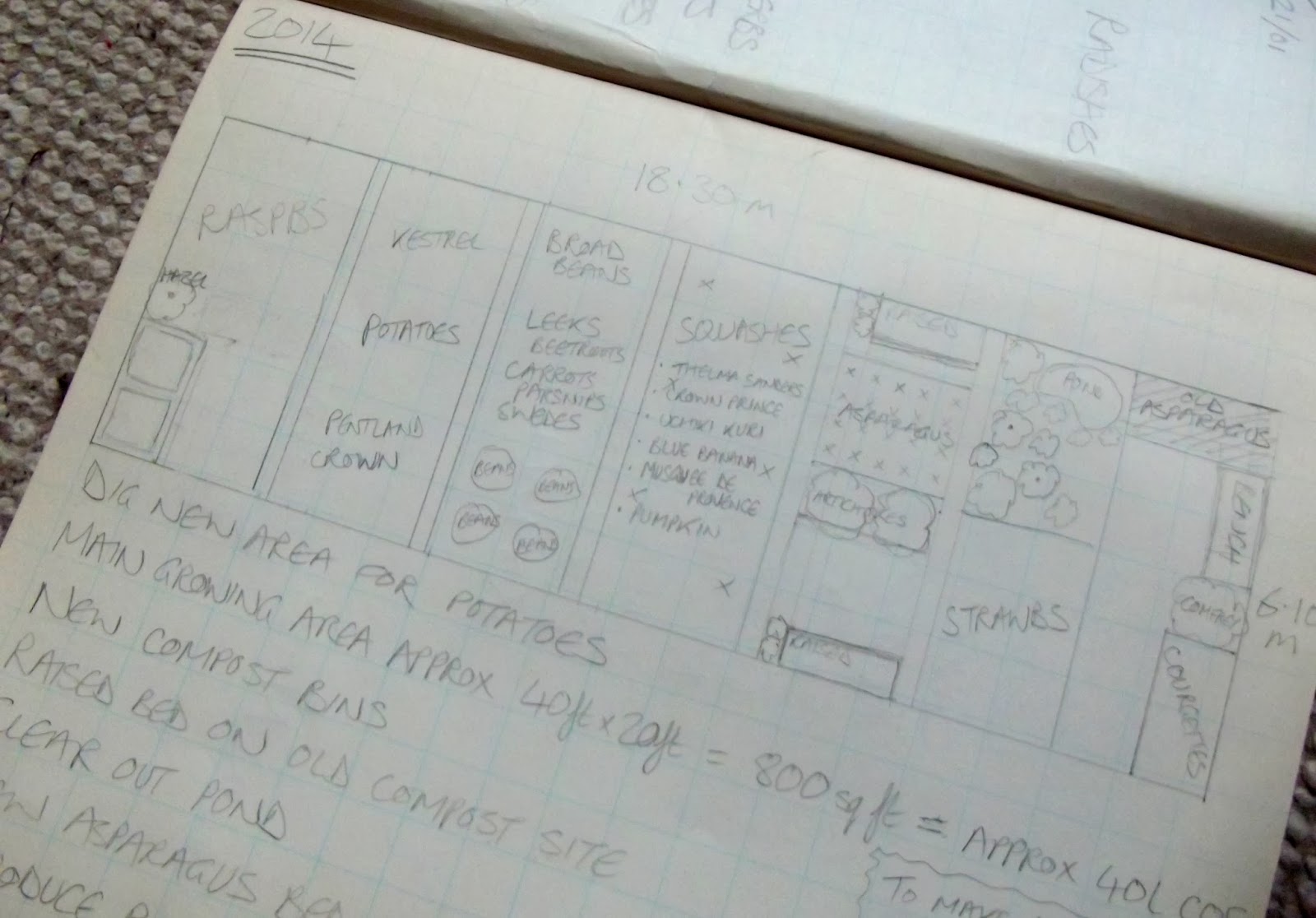
We seem to have finally beaten the grass in the middle section of our plot, allowing us to convert to no-dig growing for the most part, and this year we plan to work hard on the even grassier area down the bottom, and beat that too. This will involve some serious weeding and mulching of the raspberry bed, moving our compost bin to smother some of the troublesome grass, and digging over a tough area to plant our potatoes. Meanwhile, growing beans, roots and squashes on the middle part should be easy-peasy (though we've given up on onions and garlic thanks to the pernicious white rot in our soil), and we're going to commit one weed-free strip to perennial vegetables, including a brand new asparagus bed, some globe artichokes, and space for a new strawberry patch which we hope to plant next winter from this summer's runners. We've got some exciting new varieties to try, such as sweet-leafed stevia and Suffolk Herbs' "perennial salad mix", and we're also going to be trying out a new system for fertilising and remineralising the soil, from a fascinating book by Steve Solomon called The Intelligent Gardener: Growing Nutrient-Dense Food. More on all that to come!

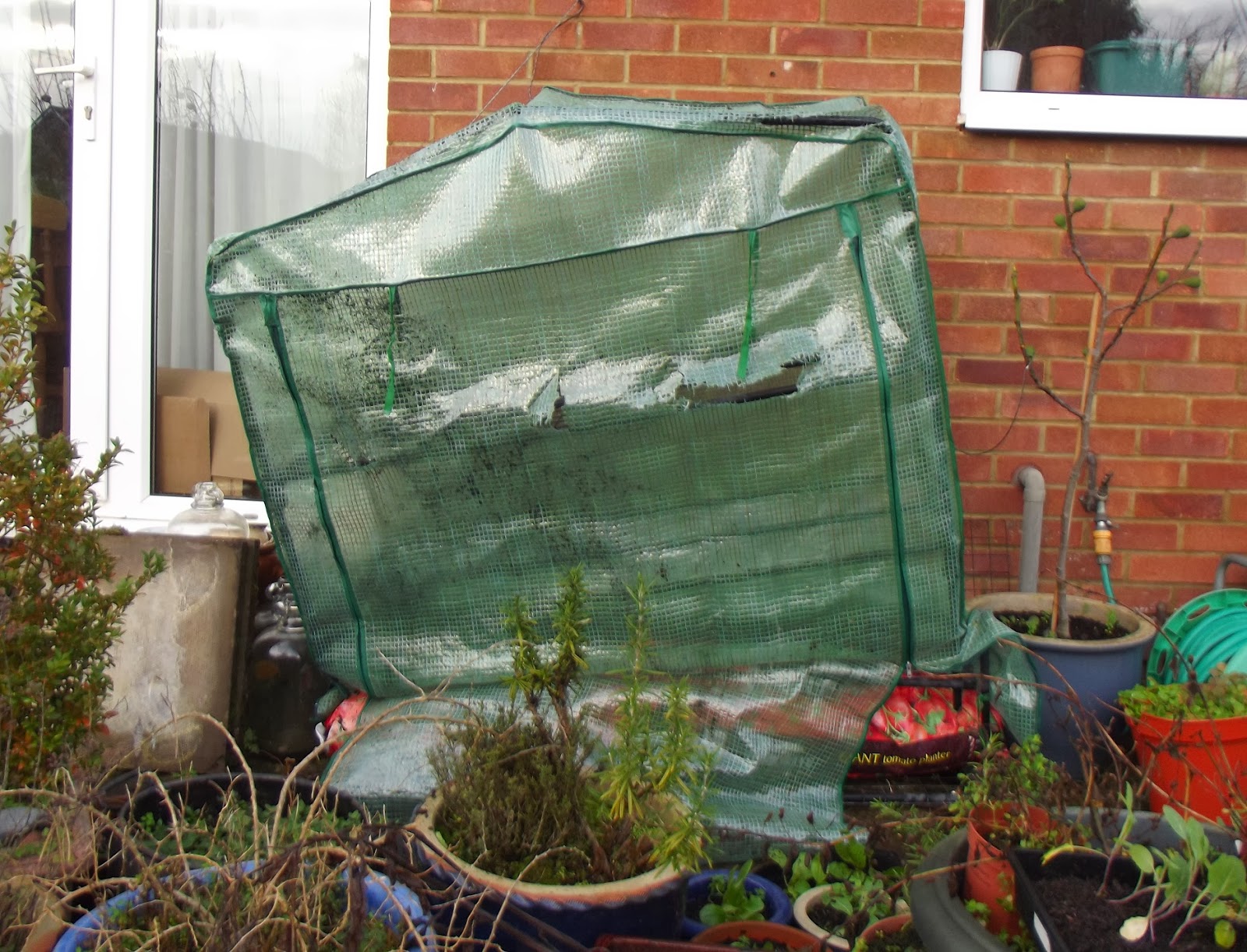
For now, I'm sitting on my hands trying to resist sowing seeds, and wondering if this is it for winter or if it's finally going to kick in next week... or maybe in March or April just to wind us all up... I will permit myself to sow peppers from 1st February but, well, this happened...


...so before that, my first priority needs to be somewhere new to put this year's tender seedlings!

Monday, 13 May 2013

Save Our Seeds - Update

The draconian new seed laws described in my last post passed the EU commission last week, with some important last-minute changes for the better. The law will now go to parliament for modification or approval, so there is still a chance of further changes, with competing and vested interests trying to change it for their own benefit. What follows are extracts from Real Seeds' press release (read the whole article here) describing the good and the bad of the final draft of the law:

WHAT DOES THE LAW SAY?
The law starts from the premise that all vegetables, fruit and trees must be officially registered before they can be reproduced or distributed. This obviously is a major restriction on seed availability, as there are all sorts of costs in both time and money dealing with the bureaucracy of a central Plant Variety Agency. Then, after making that the basic rule, there are some exceptions made in limited cases:
  • Home gardeners will be permitted to save and swap unregistered seed without breaking the law.
  • Small organisations can grow and supply unregistered vegetable seed - but only if they have less than 10 employees
  • Seedbanks can grow unregistered seed without breaking the law (but they cannot give it to the public)
  • There might be easier (in an unspecified way) rules for large producers of seeds suitable for organic agriculture etc, in some (unspecified) future legislation - maybe.
SURELY THIS IS OK THEN?
No, not really. These concessions might be helpful, but are still limited. They are subject to all sorts of 'ifs' and 'buts' in the small print. And the small print hasn't been written yet, and in fact won't be written until long after the law has been approved.
And the rest of the law is still overly restrictive - there are all sorts of rules about labelling & sealing packets for example - and in the long run will make it much harder for people to get hold of good seeds they want to grow at home or for small scale sustainable agriculture.
For years the availability of freely reproducible open-pollinated seedsuitable for sustainable agriculture has been shrinking due to the seed laws, and this new law doesn't address the problem. It just considers the needs of the agri-tech industry and makes it easier for them to market their industrial seed on a big scale.

WHAT IS THE BASIC PROBLEM?
The real problem is having a starting point that all seeds are prohibited unless officially tested and registered, and then adding some small exceptions as an afterthought.
This is really back to front - testing and registration should be voluntary. Then some people (like massive industrial farmers) who might want the sort of seed that can pass certain types of test - they can choose to use the 'officially registered' seed. And normal people would be free to choose freely what they want to grow from all the myriad of normal seed in the world.
There are also clauses that mean the above concessions could be removed at any time in the future without coming back to the Parliament for a vote.
 
WHAT DO WE WANT?
This law was written for the needs of the globalised farm-seed industry, who supply seed by the ton to industrial farmers. It should not apply at all to seed used by home gardeners and small market growers, who have very different needs.
Freely reproducible seeds are an inalienable part of our heritage. Listing and official certification of vegetable seeds might be helpful for industrial-scale farmers, but it should be a voluntary scheme that people can choose to use if they need it.
So we are calling for registration and testing to be voluntary for all non-GMO, non-patented, non-hybrid seed. That would fix all the problems with the law, while still allowing the giant agri-companies to protect their business the way they want.
But if that does not happen, then the law needs improving - because allowing tiny organisations to supply seed outside the regulations is a good start, but it is not sufficient.
Only in this way will we have a broad supply of quality seed for the needs of home gardeners and small growers.
Do keep signing the petitions if you haven't already, and keep an eye on Real Seeds or Bifurcated Carrots for updates - this isn't over yet.

Wednesday, 1 May 2013

URGENT: Save Our Seeds

On May 6th, the EU will vote on new legislation governing plant varieties, proposed by the Directorate-General for Health and Consumers in response to hard lobbying by the globalised agricultural seed industry - Monsanto and its buddies. This legislation will mean that no seed (or other plant reproductive material) can be sold, swapped or given for free to anyone anywhere in the EU unless it is registered on the EU Plant List as an 'approved' variety.


If the legislation passes, it will kill off innumerable heirloom, heritage and amateur varieties. It won't (I believe) impact the varieties already licensed for commercial use, but it will impact the huge number of 'amateur' varieties, all those that breed plants on a small scale at home, all those that forage seed and propagate wild plants, and all the rare seeds being preserved and brought back to cultivation by small businesses. It will mean high costs for seed merchants to put their varieties through rigorous tests to get them on the list - and since the tests are designed around high-output industrial varieties, many are unlikely to be approved anyway. Once a variety is approved, the seller will have to pay an annual fee to keep it that way. Heirloom varieties and other less-popular varieties will undoubtedly be lost. Small seed merchants preserving and supplying rare varieties will undoubtedly not be able to continue. Biodiversity will fall dramatically. Consumer choice will be reduced. Food security will be damaged. With every variety that dies out, the pool of genetic material for breeding future varieties will be diminished. That unique heirloom bean your grandfather gave you will be outlawed - it will be illegal to pass it on to anyone else. There'll be no seeking out local varieties when you move to a new area. There'll be none of the seed-saving and -swapping and -sharing that we growers enjoy so much - unless they're on the EU Plant List. And all this so that agricultural giants can make more money and take yet more control of our food supply.

This legislation flies in the face of nature, which propagates, adapts and evolves freely, constantly creating sub-species and sub-sub-species. It's an attempt by corporations to claim ownership of the plant world, and it's an assault on our right as earth-dwellers to enjoy and interact with the earth's natural world.

I personally grow many unusual and heritage varieties which are at risk; seeds I've saved myself and seeds I've bought from Real Seeds and others - many listed as 'amateur' varieties 'not for commercial exploitation', which Real Seeds must get round by charging 1p per year to join their 'club'. Many of these are my favourite varieties. I have a Caucasian vining spinach plant which I've only ever seen shared informally and sold by one-woman company Backyard Larder. I suspect most of these varieties would quickly become endangered if the legislation passes, and next year I'd have to grow a dramatically different selection.


I'd like to think there's no way this insane law would pass when put to the vote, but Monsanto seems to have ways to get anything it wants. I have had no replies so far to my letters to MEPs and it's simply too important an issue to just wait and see without expressing my opposition.

Whether or not you grow food yourself, this legislation has implications for your food security, the natural world all around you, and thus the future of the planet. PLEASE inform yourselves about this issue and TAKE ACTION.

Here are some links to help you:


Please share this post. We must not let this happen.
Related Posts Plugin for WordPress, Blogger...